 Seth Mandel THE JEWISH STATE June 25, 2010
Reading the reports on the state of newspapers today, and following the New Media revolution, you couldn't be blamed for thinking advertising and the riddle of the online paywall are the media's most pressing challenges.
Such is life, and worry, in a free country.
In reality, while newspapers are struggling in the West (from 2007-2009, the industry's revenue dropped by 30 percent in the U.S., according to the OECD), journalists elsewhere in the world -- especially in repressive states -- put their lives on the line. It is this combination -- falling revenue and the constant threat of death -- that has pushed Salah Uddin Shoaib Choudhury's newspaper to the brink.
Choudhury's paper, The Weekly Blitz , is published out of Bangladesh. When it was founded in 2003, advertising revenue wasn't an issue. But as soon as the Blitz started publishing pro-Israel editorials, local businesses in this Muslim country immediately started shunning the paper. Later that year, Choudhury was arrested at the airport heading to a writer's conference in Tel Aviv, tortured for 10 days, and kept in solitary confinement for 17 months at a Dhaka prison.
He is still on trial for sedition, blasphemy, and treason, for which he would be executed if found guilty.
Choudhury speaks eloquently about the fight against radical Islam and the moral imperative of supporting Israel. He is an unabashed Zionist, which many of our readers -- who filled a room in November 2009 to hear him speak -- know well.
In that speech, Choudhury mentioned that the police protection he was finally granted after the intervention of the U.S. Congress -- most notably Rep. Mark Kirk (R-Ill.) -- has been removed. As if on cue, six weeks after Choudhury gave that speech in New Brunswick, armed robbers broke into his home. The commotion woke the neighbors, and the men fled.
Such incidents have become routine, unfortunately, though Choudhury refuses to flee Bangladesh or convert out of Islam. "I remain important to the Muslims because I am a Muslim," Choudhury said back in November. "The moment I become an ex-Muslim, it makes no difference. If you want to reform a class, you need to be a member of the club. I am a member of Islam and I demand a reform in Islam... preaching hate is not the Islam that I follow; the Islam I follow is where I can embrace a Jew as a brother."
He has always been frank about his Zionism. "Today, Israel is suffering, tomorrow the world will suffer," he told me when we first met. Israel, he said, "is a land blessed by God. And God will protect his land."
And it goes without saying that bravery has never been a weakness for him. But now he is in the position of needing our help. It can't be easy for him to ask for it, but it should be easy for us to answer the call. A wealthy businessman in Bangladesh recently offered to buy Choudhury's paper for a generous sum, but Choudhury knows the man's intention: to silence one of the few pro-Israel, pro-Western voices in the East. Choudhury declined, choosing principles over money.
"But, now, our very sustainability has become almost impossible," Choudhury wrote in a message to readers. "Each month, we are losing [a] huge amount of money in continuing the print and online edition of this newspaper. For any newspaper, it is absolutely impossible to sustain without any advertisement revenue." He included the email address: ediblitz [at]yahoo.com at which he could be contacted by those willing to help.
Choudhury will get no help whatsoever from his fellow countrymen, who at best ignore him and at worst wish the government would end his troublemaking once and for all. So he needs the West to step up to the plate. Jewish organizations should do what Choudhury's close friend Richard Benkin did when he first heard Choudhury was in danger. Benkin references the one-word response Moses gave God when he was called from the burning bush: Hineni -- here I am.
Advertising revenue would be great, though a grant would be even better. We are blessed with philanthropists aplenty, and Israel has no more courageous defender than Choudhury. This is the first time he has ever made such an appeal. It has been two weeks since Choudhury published that request, and, he told me, "the situation is still unchanged. Weekly Blitz is in the very worst economic constraint."
"Today, I stand before you, the people of Bangladesh and in fact the entire Muslim world as a witness; a witness that Israelis want above all else peace and justice," Choudhury was to say in that speech prepared, but never delivered, to the writer's conference in Tel Aviv. "And those who spread false rumors to the contrary around the world, and especially in Muslim countries, are, frankly, either deluded or dishonest. I also stand before you perhaps as a living contradiction: a Zionist, a defender of Israel, and a devout, practicing Muslim, living in a Muslim country."
Israel needs such fire more than anything; yet this flame is in danger of being snuffed out. "Please pray for us," Choudhury told me this week. We should, and we will. But if all we can do is pray, we haven't done enough.
Seth Mandel is the managing editor of The Jewish State.
 Since 2003, Bangladeshi journalist and peace activist Salah Uddin Shoaib Choudhury has been investigated by Bangladeshi authorities on charges of sedition, treason and insulting religious belief. Choudhury, 44, has spent years opposing Muslim extremism through his writings, especially the Weekly Blitz which he started in 2003. He has called for interfaith dialogue and for normalizing relations between Muslim countries and Israel. On Wednesday, Choudhury returns to court. He is accused of insulting Islam and harming the state's reputation abroad, charges which, when couched as "sedition," carry a possible death penalty. "According to my lawyers in Bangladesh, the government is determined to conclude the trial as soon as possible," he wrote in a public letter over the weekend. "No one knows what will be the verdict. But, of course, seeing the past track record, we cannot hold any hope for a good [result] because the court is not applying its judicial mind, but trying to appease the Islamists." Choudhury's newspaper offices were bombed on July 6, 2006, after he expressed public sympathy for the Ahmadiyya sect of Islam. On October 5, he was attacked in his office by a mob that included prominent members of the then-ruling Bangladesh Nationalist Party, which historically has aligned itself with Islamist parties in the country, who accused him of being an Israeli agent. He was badly beaten. Choudhury was the subject of US House Resolution 64 of March 13, 2007, which objected to continued "harassment and intimidation" and his incarceration in 2004 for 17 months without legal recourse, during which he was placed in solitary confinement and "suffered harsh interrogation techniques and received no treatment for a debilitating case of glaucoma," according to the resolution. The House resolution called for the Bangladeshi government to "immediately drop all pending charges against Bangladeshi journalist Salah Uddin Shoaib Choudhury… and take steps to protect Mr. Choudhury." It noted that the "US Commission on International Religious Freedom visited with Mr. Choudhury on their trip to Bangladesh in February and March 2006... and identified Mr. Choudhury as one of those voices that should not be silenced." Choudhury's case has been taken up by human rights groups and activists including Canadian human rights expert and MP Irwin Cotler, Dr. Richard L. Benkin - like Choudhury, an advisory board member of the Islam-Israel Fellowship - the Committee to Protect Journalists, the American Jewish Committee and Reporters Without Borders. Source: JP Salah Uddin Shoaib Choudhury
Honorary Member of Muslims Against Sharia
Latest recipients of The MASH Award

 Dr. Richard L. Benkin Looking from the outside, one might conclude that the fight for Bangladeshi journalist Salah Uddin Shoaib Choudhury has reached an impasse. And while we seem well passed the time when every month brought new and significant actions by either the Bangladeshi government or Shoaib’s defenders, it would be a mistake to conclude that the world has forgotten about the anti-Islamist Muslim. Not a week goes by when I do not receive at least one interrogatory about Shoaib Choudhury and his fight for justice. Sometimes, it is from the media; and even as I have been speaking about saving the Bangladeshi Hindus from government-tolerated discrimination; the events and radio shows always begin with the host asking me for an update on the fate of Salah Uddin Shoaib Choudhury. Calls and emails come in from average citizens wanting to know if he is all right and what they can do to help. We still receive the occasional offer of asylum—something Shoaib consistently turns down because, as he makes clear, he is a Bangladeshi. “Let the radicals leave my country,” he says at such times. I still get periodic questions about boycotting Bangladeshi goods; something I have been against to this point, by the way. Significantly, however, there is continued concern on the part of governments, as well. Recent concern from the government of Australia is instructive. The Australian Foreign Ministry has expressed interest in meeting with me for an update on the status of the Shoaib Choudhury case and to see what might be proper for it to do. In a recent letter to Australian Senator Ursula Stephens, the Foreign Ministry wrote that “The Australian Government will continue to encourage the Government of Bangladesh to ensure that Mr. Choudhury’s trial is conducted in an expeditious and transparent fashion in accordance with proper judicial process and that his human rights are respected at all times." Stephens is a high ranking member of the ruling party, who is close to Prime Minister Kevin Rudd. She also has been an outspoken advocate for Shoaib Choudhury. Read more ...Source: Interfaith Strength
Why is the West ignoring human rights abuses in Bangladesh that, had they happened in Tibet or Burma, would stir the fires of indignation?Dr. Sami Alrabaa If what happened to Salahuddin Shoaib Choudhury, editor in chief of the Bangladeshi Weekly Blitz and peace activist, and his colleagues, happened in Tibet or Burma, for instance, the international media would rush to these regions and report about them meticulously, and human rights activists worldwide would take to the streets and demonstrate against the oppressors. Mr. Choudhury is fighting radical Islam in one of largest Muslim countries of the world (150 million). If the West does not support Choudhury’s struggle, a whole society will increasingly drift to Islamism. Bangladesh is being Talibanized day after day. Read more ... Source: Family Security MattersSalah Uddin Shoaib Choudhury
Latest recipient of The MASH Award
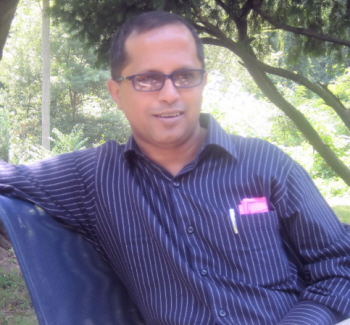 By Dr. Richard Benkin Wednesday, August 20, 2008
Picture the following scenario. You live in a country that long ago declared itself a “people’s republic” with Islam as its official religion. Although you are a Muslim, you have openly declared yourself to be a “Muslim Zionist” and are known for advocating relations with Israel and other positions that are very unpopular with the Islamic radicals who have accrued considerable power in your country.
For your stance, you have been persecuted, jailed and tortured, your family harassed and your brother beaten, your place of business first bombed and later taken over by a mob that was allowed to do so with impunity.
Earlier this year, a group known for its human rights violations took you into its custody and it required nothing short of an international outcry to force them to release you. Now, you find yourself on trial for “sedition, treason, and blasphemy” and could receive the death penalty (or more likely a very long prison term) if convicted.
Welcome to the world of Salah Uddin Shoaib Choudhury. The Bangladeshi journalist has garnered the support of people and governments around the world in the years following his 2003 arrest. He and I had been working together for some time in an effort to provide Bangladeshis with unbiased news about Israel, the United States, and the Jewish people. We even saw signs that we were beginning to succeed.
We did not know, however, that radicals had him under surveillance and were preparing to force his arrest ever since he begin publishing articles that exposed their growing power and use of madrassas [Muslim religious schools] to teach young Bangladeshis jihad. At first, no one was interested in the fate of this one man, but as more and more people became aware of what he stood for and what was happening to him, that changed. The previous Bangladeshi government that took these actions did so, according to several of their officials, to appease the Islamist radicals in their coalition. They also counted on the world being indifferent to their actions. They miscalculated about that, but continued to tell us that they knew the charges were baseless but were “afraid of how the radicals will react” if they drop them. In a 2005 meeting that eventually led to Choudhury’s freedom, then Bangladesh Ambassador Shamsher M. Chowdhury told US Congressman Mark Kirk (R-IL) and me that the case was “a purely personal financial dispute, nothing more.”
Choudhury’s trial on those charges began this month and while it is far too early to draw any firm conclusions, its first days have been marked by a level of judicial fairness that was unknown under the previous government. (On January 11, 2007, a bloodless coup brought a new “caretaker” government to power with the military’s backing.) But at approximately 10am on August 7, while Choudhury was in court for the trial’s second day, his household staff saw someone speed up to his home on a motorbike and start taking videos of the house. When they confronted him, the man identified himself only as “Sohel” and claimed to be a journalist from Daily Manabzamin, a Bangla-language newspaper edited by Voice of America correspondent Mathiur Rahman Chowdhury. He handed them a slip of paper with a cell phone number for Shoaib to call, continued filming, and left.
Unfortunately, this was far and away not the first incident of suspicious activity at Choudhury’s home or business. The pro-US, pro-Israel Muslim receives threats regularly-some credible, others not. There was one 2006 incident in which he called me to report that the Islamist group Khatmey Nabuat Movement (KTM) threatened him with “dire consequences” after we had written articles critical of it and thwarted its attempted attack on a minority Muslim sect, the Ahmadiyyas. Islamists hate the Ahmadiyyas for believing in Jesus’s virgin birth and that Mohammed was not “the final prophet.” The Pakistani government has declared them to be non-Muslims and Islamists were trying to do the same in Bangladesh. In response to KTM’s threatened “dire consequences,” Choudhury gathered dozens of supporters, representing every religious group in Bangladesh, who stayed with him throughout the night in case the Islamists tried to carry out their threat. In a more recent and even more harrowing incident, Choudhury was abducted by the notorious Rapid Action Battalion (RAB), a government paramilitary group whose captives often “disappear.” We responded more directly to that immediate danger and helped force his release after a few hours.
Choudhury is almost stoic at times. “You get used to it,” he said. But not complacent. When his younger brother, Sohail Choudhury, called him to report the “Sohel” incident, the senior Choudhury sent text messages to the police and members of the government; and to the Daily Manabzamin. He also called his own newspaper, Weekly Blitz, and asked one his staff, Rana Masud, to get to the bottom of the matter since Masud’s brother is a senior journalist with Manabzamin. That newspaper confirmed that it employs no one named Sohel and in any event did not send anyone to the Choudhury home.
Masud then called the phone number that Sohel left, and the latter admitted that he lied when he said he worked for Manabzamin. He said that he actually worked but for Daily Aparashkantha, “an underground newspaper known for blackmailing people,” according to Choudhury. Masud asked , “Why did you go to Choudhury’s residence? Why did you take video footage?”
Sohel: “Ask Choudhury to call Aparadhkantha editor Rashedul Hassan. Choudhury owes 100,000 Taka [roughly $1,500 US] to Rashed.”
Masud: “100,000 Taka? No it is false. Rashed came to our office in April and asked for TK. 1 million as ‘loan.’ But Mr. Choudhury declined to give such loan. Why you are trying to put false pressure to extract money from us?”
Sohel: “Ask Choudhury to call Rashed and settle the matter.”
Roughly translated as “Crime Voice,” Aparashkantha had been running screaming front page headlines about Shoaib’s trial since its start the day before. The headlined and accompanying articles were sensationalistic and urged that “the Zionist spy” be convicted of sedition, treason, and blasphemy. The paper was now demanding that Choudhury provide a payoff of 100,000 Bangladeshi Taka, roughly $1500 in US currency to Rashed.
Choudhury has filed a formal complaint about the incident with the Dhaka police, but so far has received no response. Aparashkantha is rumored to have ties with both organized crime and the government’s paramilitary group, Rapid Action Battalion. When I spoke with representatives of the Bangladeshi government, who wish to remain anonymous, they reminded me that this is essentially a criminal matter (unless Choudhury also wants to press a civil suit) and not the province of the central government. They did assure me, however, that they would look into the matter nonetheless. Dr. Richard L. Benkin secured the release of Bangladeshi journalist Salah Uddin Shoaib Choudhury in 2005. The two continue working together to fight Islamist radicals and their allies in South Asia and elsewhere. For more information on how to help, please contact Dr. Benkin at drrbenkin@comcast.net. Their web site is [url=http://www.InterfaithStrength.com]http://www.InterfaithStrength.com[/url]. Source: Canada Free Press
By Richard L. Benkin He fired the first salvo in 2003 and has been sticking his thumb in Islamist eyes ever since. Bangladeshi journalist Salah Uddin Shoaib Choudhury describes himself as a "Muslim Zionist." He is unabashedly pro-US, pro-Israel, and anti-Islamist. More importantly, he remains all of that from within the Muslim world, which he refuses to leave. I have fielded any number of asylum requests for him, and he declined them all. "Retreat is not in my vocabulary," he says, for he believes that if he were to leave his country, his credibility would be gone, and Islamists would claim victory; a satisfaction he refuses to give them. "Bangladesh is my country," he says. "Let the radicals leave!" Read more ...Source: Islam Watch
 |
|
|
Copyright Muslims Against Sharia 2008. All rights reserved.
E-mail: info AT ReformIslam.org
|
|
|


 Posts
Posts


