 Islamist elements in Pakistan’s military unhappy with President Asif Zardari are reported to be plotting to remove their country’s civilian government and replace it with a military dictatorship. Islamist elements in Pakistan’s military unhappy with President Asif Zardari are reported to be plotting to remove their country’s civilian government and replace it with a military dictatorship. Two days after General David Petraeus, chief of US Central Command, dismissed fears of an imminent military coup, Pakistan’s defense minister, Ahmed Mukhtar, was prevented Thursday evening by border officials from leaving the country to visit China.
According to one report, there are 248 such names on the border authorities’ list, including other high-ranking government members, of Pakistanis now denied exit rights. The ostensible reason for Mukhtar’s detainment was that he, and other ministers of the ruling Pakistan People’s Party (PPP), is facing corruption charges and a possible jail term. Last Wednesday, Pakistan’s Supreme Court struck down the amnesty, called the National Reconciliation Ordinance (NRO), which protected them and 8,000 other bureaucrats from prosecution, reviving old charges.
The Supreme Court ruled unconstitutional the 2007 NRO amnesty that paved the way for Zardari’s murdered wife and then PPP leader, Benazir Bhutto, to return to Pakistan. With the Supreme Court’s ruling, several ministers are now expected to resign, endangering the survival of the Zardari civilian government. Opposition parties are also calling for Zardari himself to step down, but he has presidential immunity from prosecution. The Supreme Court’s NRO ruling, though, is expected to leave Pakistan’s president open to legal proceedings regarding his eligibility as a candidate in last year’s election. Columnist and former Pakistani activist Tarek Fatah writes that “religious right–wing backers of the Taliban and al Qaeda” in Pakistan’s military-industrial complex are behind this destruction of the Zardari government by legal means. “Working from within the government, military intelligence was able to coax a junior minister to release a list of supposedly corrupt politicians and public officials in the country,” wrote Fatah. “Leading them was Mr. Zardari himself – notwithstanding the fact that before he was elected president, he had been imprisoned for more than a decade by the military without a single conviction.” Zardari came to office a year ago last August, taking over from disgraced military ruler Pervez Musharraf who resigned under threat of impeachment. Musharraf had come to power after staging the last military coup against a civilian president in 1999. Pakistan has been ruled by military leaders for about half of its 62 year history, so military takeovers are almost a part of the political fabric. Army rule usually lasts about a decade before a civilian government is re-established which lasts an almost equal length of time. The current military threat to civilian rule is somewhat unusual, as Zardari has been in office only a year and four months. A main reason for the military coups, though, is that the civilian politicians’ corruption and incompetence eventually become too ruinous for the country. More at FPM 
 PRESIDENT Asif Ali Zardari has given up control of Pakistan's nuclear arsenal in a bid to fend off mounting pressures threatening to weaken his rule further and complicate the war on the Taliban. Mr Zardari took the decision overnight as an amnesty protecting him and key aides from corruption cases expired and risked flinging the country, struggling to contain a Taliban insurgency in the northwest, into fresh political crisis. The presidency announced that control of the National Command Authority, which analysts and lawyers confirmed is responsible for nuclear weapons, had shifted to Prime Minister Yousuf Raza Gilani. "The president has handed over his power regarding the national command and control authority to me and has issued an ordinance," Mr Gilani said. Islamabad earlier this month rejected a report in The New Yorker magazine that raised fears of a militant seizure of Pakistan's nuclear weapons and suggested that the US had a hand in protecting the arsenal. Mr Zardari's predecessor, military ruler Pervez Musharraf, enforced a state of emergency in 2007, introducing a 17th amendment to the constitution that gives the president the power to dissolve parliament and sack the prime minister. "We are going in the right direction. There is no threat to democracy and to the present government," said Mr Gilani, a member of Zardari's Pakistan People's Party (PPP) but who is said to enjoy closer relations with the military. "He believes in the balance of power between the presidency and the parliament and he is committed to undo the 17th amendment," he said. More in the Australian
 ISLAMABAD, Pakistan — Military sources in Pakistan are confirming U.S. suspicions that money meant for helping Pakistan battle militants has been diverted to other causes. ISLAMABAD, Pakistan — Military sources in Pakistan are confirming U.S. suspicions that money meant for helping Pakistan battle militants has been diverted to other causes. Two army generals tell The Associated Press that between 2002 and 2008, only $500 million of the $6.6 billion in U.S. aid actually made it to the Pakistani military. The generals asked to remain anonymous because military rules forbid them from speaking publicly. Their account was backed up by other retired and active generals, former bureaucrats and government ministers. At the time of the siphoning, Pervez Musharraf, a Washington ally, served as both chief of staff and president, making it easier to divert money to bolster his sagging image at home. Pakistan's ambassador to the U.S. under Musharraf says "the army itself got very little." The misuse of funding helps to explain how Al Qaeda was able to regroup, grow and take on the weak Pakistani army. Even now, the army complains of inadequate equipment to battle Taliban entrenched in tribal regions. Source: FoxNews
 Bruce Loudon The Weekend Australian Magazine reveals today evidence that a bullet - probably sniper fire from a high-velocity rifle - killed the former prime minister. The Musharraf regime said a "bump on the head" resulting from a Taliban or al-Qa'ida suicide bomber killed Bhutto on December 27, 2007, shortly before an election she was expected to win. This evidence contradicts the regime's claim that the murder was the work of the Pakistan Taliban leader Baitullah Mehsud, who was killed in a US unmanned drone attack. There is no history of the militants using sniper fire - or even regular gunfire - in any of the hundreds of suicide attacks they have mounted in Pakistan. Also revealed in The Weekend Australian Magazine is detail of the cover-up that followed Bhutto's murder. The crime scene in Liaquat Bagh, a park in Rawalpindi, was washed with high-pressure hoses within 45 minutes of the blast, destroying almost all forensic evidence. Naheed Khan, Bhutto's political secretary for 23 years, who cradled her head as she died, told The Weekend Australian Magazine: "There were bullets coming from different directions. There are lots of high buildings overlooking the area. This was a typical intelligence (agency) operation." Ms Khan's husband, senator Safdar Abbasi, who is also a doctor, was in the Toyota Landcruiser when Bhutto was attacked. "The way she died - her instant death - suggests very sharp sniper fire. A typical intelligence (agency) operation." The Weekend Australian Magazine reveals that, despite the law in Pakistan mandating autopsies in all cases of murder, and doctors attending Bhutto telling police that one should be carried out, none was performed on her or others who died in Liaquat Bagh. Within hours, her body had been flown to Sindh province for burial, without a full forensic examination. There is no suggestion of any involvement by Mr Musharraf in her murder. But the UN investigators want to question the former general. Given the authority he wielded in Pakistan, including over the army and its agencies, Mr Musharraf, 66, is thought to be in a better position than most to cast light on events surrounding the assassination. At his apartment off London's Edgeware Road, living under the protection of the British government, Mr Musharraf has appeared untroubled by demands to bring him back to Pakistan. He has played bridge with friends and eaten out during the holy month of Ramadan. An internationally brokered secret deal allowed Mr Musharraf to step down and assured his future security. After long delays in getting Security Council approval for its mission, the UN investigators started looking into Bhutto's death in July and are expected to report to Secretary-General Ban Ki-moon this year. The investigators are reported to be preparing to talk to people in London and Washington, including CNN presenter Wolf Blitzer. On October 20, 2007, Bhutto sent Blitzer an email, through a friend, reading: "If it is God's will, nothing will happen to me. But if anything happened to me, I would hold Pervez Musharraf responsible." Investigations into Bhutto's killing are the subject of controversy in Pakistan. Source: The Australian
 Former Pakistani President Gen. Pervez Musharraf believes his country should be given drone aircraft so it can take out top terror suspects without the help of the West, he told FOX News in an exclusive interview. Former Pakistani President Gen. Pervez Musharraf believes his country should be given drone aircraft so it can take out top terror suspects without the help of the West, he told FOX News in an exclusive interview. Musharraf became a key U.S. ally after the Sept. 11 terror attacks and joined the United States in fighting the Taliban and Al Qaeda. He became the target of repeated assassination attempts — but he says he acted for the good of his country — not for U.S. benefit. “It was not for United States alone ... it was for Pakistan," he said during a wide-ranging interview with FOX News' Amy Kellogg in London. "[W]e are a progressive, moderate people, so it was very clear that we cannot accept" the Talibanization of his country, he said, calling it an easy decision to turn his military's sights on the militants. "They were roaming around our cities and causing terrorist attacks in our cities and all over, and we had to eliminate that." Musharraf said that Al Qaeda has been significantly diminished in Pakistan, but the Taliban is thriving.
Yet he believes that the unmanned aircraft the U.S. uses to target key militants in Pakistan should be handed over to his country. Read more here,,,, Source: FoxNews
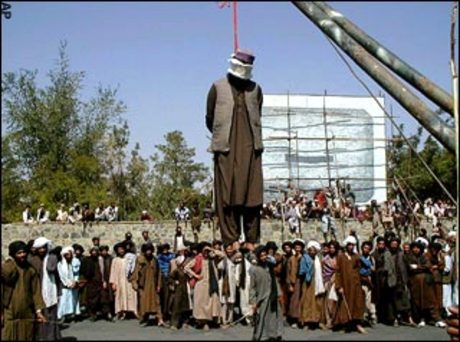 In a lecture delivered in Karachi on Monday last, Pakistani journalist Ahmed Rashid, author of Descent into Chaos: The United States and the Failure of Nation Building in Afghanistan, and Central Asia, observed: "I no longer say that there's a creeping Talibanization in Pakistan; it's a galloping Talibanization." The lecture was published by The Dawn Blog. The following are excerpts: [1]
The Taliban "Are Not an Extension of an External Threat; They Are Not Being Funded by Russia or India" "The myths about the Taliban need to be clarified. They are not an extension of an external threat; they are not being funded by Russia or India. In the 1990s, the Taliban in Afghanistan were fighting the Northern Alliance, and thousands of Pashtuns went to fight as foot soldiers on behalf of the Taliban. In 2001, the Afghan Taliban fled to Pakistan. Pakistani Taliban, who previously had little clout, became hosts of the Afghan Taliban and earned much money for their assistance. "From 2001 to 2004, the Pakistani Taliban grew in numbers and influence and became radicalized because of their proximity to the Afghan Taliban. They planned and mobilized to establish a Taliban 'emirate' or state in FATA [the Federally Administered Tribal Areas situated along the Afghan border] and the expansion of that idea of statehood is what we see happening today...." "Groups Cultivated [by the Pakistani Army] to Fight in Kashmir Have Joined up with the Pakistani Taliban - And Include Punjabis with Organizations Such as Lashkar-e-Taiba and Harkatul Mujahideen; Now, Some 40 Groups in Pakistan are Loosely Affiliated" "The leadership of the Taliban is now in Pakistan, and they have stated their intention of overthrowing the government here. The Taliban are linking up with groups in Pakistan, and the Pakistani Taliban movement is turning into a multiethnic movement. Groups cultivated [by the Pakistani Army] to fight in Kashmir have joined up with the Pakistani Taliban, and include Punjabis, with organizations such as Lashkar-e-Taiba and Harkatul Mujahideen. Now, some 40 groups in Pakistan are loosely affiliated.... For that reason, Pakistan faces a more dangerous situation than Afghanistan, where Tajik and Uzbek fighters were not permitted to join the Afghan Taliban movement. "Pakistan is also weaker because of a raging economic crisis, the ongoing insurgency in Baluchistan, and a political crisis...." "Before 2008, the Musharraf government allowed the Taliban to resettle in Pakistan from Afghanistan. Musharraf wanted to maintain the jihadi nexus as a force against the Indians. Also, the emphasis then was on getting rid of Al Qaeda, the Taliban were not seen as a major threat. "After 2004/2005, when military operations did begin in FATA, the government pursued a stop-and-start policy, which involved several peace deals that did not hold. In the meantime, the Pakistan government and army failed to protect the people of the FATA and the traditional tribal hierarchies that were pro-Pakistan. About 300 maliks of tribes [tribal elders] were killed and by 2007, there were half a million refugees from FATA in Pakistan. Having lost the goodwill of the population in FATA, the government will find it hard to re-enter the area and rebuild traditional tribal structures...." "U.S. President Barack Obama is now doing what Bush should have done in Afghanistan (troop surge, capacity building, securing the ground to ensure that presidential elections can take place this August). In Pakistan, however, American options are limited. There was a hope that after February 2008 elections, there would be a strong coalition government that could serve as a civilian partner for Obama to partner with. After all, the Pakistan] Army has proved unreliable ally (especially since it still thinks that India is the main enemy; army officials dislike Indian presence in Afghanistan; and army officials don't like Karzai and other Afghan leaders)...." "India is Not Funding the Taliban; India Realizes That the Taliban will Be at Their Border Next And They have Nothing to Gain from Supporting the Militants." "There is a tit-for-tat game between India and Pakistan whereby they support nationalist insurgencies in each other's countries (so while India may be giving funds in Baluchistan, Pakistan is helping out rebels in Assam). But India is not funding the Taliban. India realizes that the Taliban will be at their border next and they have nothing to gain from supporting the militants. "Afghanistan is Not Only a Problem; It Becomes a Trigger for Regional Problem Solving" "The new focus of Obama administration is regional policy - get Afghanistan's six neighbors involved and make them sort out regional stability and set a common agenda. But first, bilateral issues will have to be sorted: Indo-Pak will have to clear the air, Pakistan and Central Asian states will have to reach understandings, and Iran and the US will have to start negotiating. This way, Afghanistan is not only a problem; it becomes a trigger for regional problem solving. This is one of the most doable and productive aspects of the Obama policy for Af-Pak...." "The Taliban have an Expansionist Agenda; They Make Deals in One Area So That They can Secure it And Then Move into Other Areas" "The Taliban have an expansionist agenda. They make deals in one area so that they can secure it and then move into other areas. There has also been no cessation of their killing of ANP [Awami National Party, a secular ruling party] and other government officials and they have not agreed to lay down their arms. Instead of achieving anything, the Swat [Shari'a-for-peace] deal formalises a different form of law and governance for one part of Pakistan, thus weakening the government...." Source: MEMRI
H/T JihadWatch
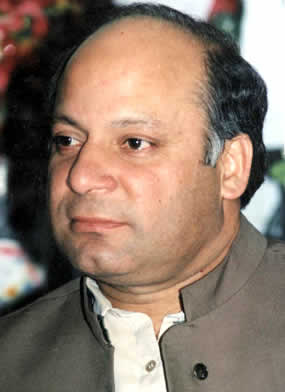 Pakistan's main opposition leader Nawaz Sharif has defied house arrest, ramping up his challenge to the government, as riot police clashed with stone-throwing mobs in street battles.
The former premier, now the most popular political leader in the country, led about 10,000 supporters in a banned protest in Lahore, from where he has urged thousands of activists to march on the capital Islamabad by Monday.
Sharif, locked in a standoff with President Asif Ali Zardari since the Supreme Court on February 25 barred him from running for office, is demanding the government reinstate judges deposed by ex-military ruler Pervez Musharraf.
'We don't accept this decision. The house arrest is illegal and immoral. All these decisions are unconstitutional,' he told a crowd after breaking his house arrest order.
'Come and join me. I am leaving the house. The time has come to march hand in hand.'
In the most violent scenes since the crisis began, riot police wearing body armour baton-charged protesters and fired tear gas.
Witnesses said more than a dozen people were wounded.
'The main GPO Square looked like a battleground. I saw at least two ambulances ferrying casualties to the hospital,' said resident Hanif Goraya, as Sharif supporters brought the city centre to a standstill.
'Police fired scores of shells, inside and outside the Lahore High Court building. A shell hit my left thigh, I received stitches. The injured include lawyers, political workers and some police officials,' he said.
At one point, crowds surged ahead of Sharif's convoy to mob two public transport buses blocking the route, forcing drivers to rescue the vehicles from being set alight, as a large police presence melted away.
His SUV inched through the streets and down The Mall of Lahore in a convoy of security vans, accompanied by private guards and supporters perched in vehicles and streaming behind on foot, an AFP reporter said.
'We tried our best to stop the crowd but they did not stop, Lahore city police chief Habib-ur Rehman says.
Nasir Zaidi, an intelligence official in Lahore, estimated that about 10,000 people were demonstrating in Lahore -- 3,000 outside the high court and the rest thronging behind Sharif, heading towards the court.
He was to address supporters in the city later on Sunday.
Facing the worst political crisis of his rule, Zardari has ordered a countrywide crackdown, banning protests, forcibly detaining activists and blocking provincial borders in a move that provoked concern in the West.
Soldiers armed with guns have sealed off the main entry into Islamabad from the garrison city of Rawalpindi, an AFP correspondent said.
The turmoil could not come at a worse time for the nuclear-armed Muslim nation, a central front in US President Barack Obama's fight against Islamist militancy and facing a wave of Taliban and al-Qaeda-linked violence.
About 1,800 activists have been arrested since Thursday, the vast majority in Sharif's stronghold of Punjab province where the chief lawyer fighting to reinstate the judges, Aitzaz Ahsan, was also detained, officials said.
Analysts warned that a reluctant military, which has ruled Pakistan for more than half its 62-year existence, would be forced to intervene.
'The situation is getting chaotic. It seems violence will take over and compel the army to intervene at some stage, defence and political analyst Talat Masood says.
'The army is extremely hesitant. But it is giving Zardari a firm message to come to terms with the opposition to avert violence,' he says.
The massively unpopular president, widower of assassinated former premier Benazir Bhutto, has also come under huge US pressure to end the standoff.
Late on Saturday he held out concessions, vowing to appeal against the court ruling that barred Sharif from office and pledging to restore the judges -- albeit without providing any dates or firm details.
Musharraf removed independent-minded chief justice Iftikhar Muhammad Chaudhry and about 60 other judges in 2007, fearing that he would be declared ineligible to contest a presidential election while in military uniform.
The move triggered a countrywide protest, spearheaded by lawyers, that ultimately forced Musharraf to quit in August 2008. Source: SkyNews
 Amanda Hodge, South Asia correspondent February 27
PAKISTAN plunged into a fresh political crisis amid nationwide demonstrations yesterday at a Supreme Court decision barring popular opposition leader Nawaz Sharif and his brother from holding elected office.
President and political rival Asif Ali Zardari suspended the provincial parliament and imposed executive rule in the Sharif brothers' home state of Punjab -- Pakistan's most populous state and its traditional power centre -- in an attempt to contain anticipated large-scale protests by the country's legal fraternity.
But the move failed to suppress widespread anger at the court decision, which was criticised in many quarters as politically motivated.
e an already vulnerable civilian Government struggling to maintain control of the country in the face of a rising militant insurgency within its borders and a near-bankrupt economy.
Pakistan's share market fell 5 per cent at the close of trade and showed no sign of recovery.
The unrest will trigger concern in Washington, which needs stable government in Pakistan to help combat al-Qa'ida and Taliban militants using its territory as a base from which to launch attacks on coalition troops in Afghanistan.
Many analysts and foreign diplomats are warning that the country faces a calamitous slide into the sort of political infighting and instability that led to a military takeover by former general Pervez Musharraf in 1999.
"The Sharifs have been thrown out of politics, and they are going to react," prominent political commentator Shafqat Mahmood said.
"In the next three to six months, the political order will become very shaky."
The long-awaited Supreme Court decision was the result of an appeal against a ruling barring two-time prime minister Mr Sharif from contesting elections over his conviction on charges of hijacking Mr Musharraf's aircraft to try and forestall the coup.
It was also considering allegations of irregularities in his brother's election to provincial parliament.
Punjab is controlled by Mr Sharif's PML (N) party, and until yesterday Shahbaz Sharif was Punjab's chief minister.
Analysts said the Government's actions against the Sharifs were aimed at weakening their hold on Punjab -- a theory bolstered by recent talks aimed at an alliance between Mr Zadari's ruling Pakistan People's Party and another Punjab-based opposition party, PML (Q).
Mr Sharif reacted angrily to the decision, calling for Pakistanis to "rise against this unconstitutional decision and this nefarious act of Zardari". He said he opposed violence but added: "If the people want to show their anger, who can stop them?"
While the Government urged PML (N) to "control its supporters for the sake of democracy", thousands of protestors yesterday answered the Sharifs' call, staging fiery demonstrations.
Mr Sharif also called for people to join a massive lawyers' march planned for early next month to demand the reinstatement of more than 70 judges sacked by Mr Musharraf in 2007 for alleged misconduct.
The move sparked widespread protests that led to Mr Musharraf imposing a state of emergency in late 2007 and, eventually, to his downfall in August last year.
While the Sharifs command popular support in Punjab, the degree of instability in coming weeks will depend on how much support they can muster in Pakistan's three other states. Source: The Australian
 By Hamid Mir Sunday, August 17, 2008
ISLAMABAD: Israeli President Shimon Peres is desperately trying to help his friend President Pervez Musharraf and is putting indirect pressure on the coalition government through different diplomatic channels not to impeach him, Foreign Office sources reveal.
The sources claim that Peres wants a safe exit for Musharraf and he is also ready to provide security to his friend outside Pakistan. These sources also claim that Peres and Musharraf are in regular contact with each other for the last three years. Both met first in Davos in January 2005 and since then they have been writing letters to each other and exchanging pleasantries on telephone regularly.
According to the sources, Peres wrote his first-ever official letter to Musharraf in October 2007, appreciating his efforts in the fight against terrorism. Musharraf, in his response, thanked the Israeli president for his support and good wishes. These letters were exchanged through diplomatic channels of Turkey.
Peres called his Pakistani friend again a few days ago. Though the details of their conversation were not available with the Foreign Office yet it is believed that Peres offered his friend some help.
Informed sources are of the view that Israel has strong friendly relations with Turkey and is in a position to provide security to Musharraf in Turkey. One close friend of Musharraf is also busy in lobbying for him in the Jewish lobby in the US these days. This friend of Musharraf has met many leaders of the World Jewish Congress recently. Musharraf even praised this friend publicly in recognition of his services for facilitating him to address the Jewish lobby in New York. This special friend still enjoys ministerial status in Pakistan without being elected and despite the fact that he is an American citizen. It has been learnt that the same friend is requesting his American Jewish contacts to do something for the safe exit of Musharraf through Israeli President Shimon Peres.
Peres had openly said in October 2001 that he prayed for the life of Musharraf every morning as he (Musharraf) had signed his death warrant by changing the Afghan policy of Pakistan. After that, Musharraf also came into contact with the late Israeli prime minister Ariel Sharon. He also met Israeli Defence Minister Ehud Barak in January this year in Paris.
Diplomatic sources claim that Musharraf is the most popular Pakistani leader in Israel. He was the first Pakistani leader who was invited to address the World Jewish Congress in the US in 2005. After that historic event, the then foreign minister of Pakistan Khurshid Kasuri met his Israeli counterpart Silvon Shalom in Turkey in 2005.
Musharraf had asked the Foreign Office in early 2007 to prepare a plan for the recognition of Israel but it did not materialise due to the political turmoil started in March 2007. It is also pertinent to mention here that Indian National Security Adviser MK Narayanan was the first foreign leader to come out openly in support of Musharraf on Wednesday, saying his impeachment would only help extremist elements in the country. The same Indian leader had declared on December 19, 2007 that India could trust Musharraf but not Benazir Bhutto.
Musharraf knows that he is still popular among the Indian and Israeli establishments and has a lot of friends in Western capitals as well. If provided a safe exit, he can find a new role for himself in international diplomacy.
Highly placed sources in the coalition government claim that Musharraf is now completely isolated and he has informed Asif Ali Zardari, through the governor Punjab, that he would resign if provided special indemnity. However, the coalition government is not ready to provide him indemnity and in that case he would face the first-ever humiliating impeachment process, which would definitely make history in Pakistan.
Hamid Mir is the Executive Editor of Geo TV in Islamabad and he has also interviewed Osama bin Laden, Tony Blair, Condoleezza Rice, General Pervaiz Musharraf, Hamid Karzai, L K Advani and other international leaders.
Source: Canada Free Press
Philippe Naughton | August 18, 2008 PERVEZ Musharraf announced today that he was resigning as a President of Pakistan to avoid an impeachment battle that would harm the nation¿s interests.Mr Musharraf made the announcement during a lengthy and at times emotional televised address in which he said that he was leaving office knowing that whatever he has done "was for the people and for the country". "After consultations with legal advisers and close political supporters and on their advice, I’m taking the decision of resigning," the former general said. "My resignation will go to the speaker of the National Assembly today." Until he confirmed his resignation towards the end, however, much of his defiant speech was spent denying that any of the impeachment charges against him could stand and angrily defending his time in power. "Not a single charge in the impeachment can stand against me," he said. "No charge can be proved against me because I never did anything for myself, it was all for Pakistan."Mr Musharraf dominated Pakistan for years after seizing power in a 1999 military coup, making the country a key strategic ally of the United States by supporting the war on terror. But his popularity at home sank over the years. Many Pakistanis blame rising violence in their country on his alliance with the United States, and his reputation suffered further last year 2007 when he ousted dozens of judges and imposed emergency rule. He has been increasingly isolated since a parliamentary election last February elected a coalition government opposed to him. The government, led by the party of assassinated former Prime Minister Benazir Bhutto, said earlier this month that it planned to impeach Mr Musharraf for violating the constitution and other alleged crimes, in what was seen as a clear attempt to force him from office. Officials from Saudi Arabia, as well as the United States and Britain, have been involved in negotiations aimed at ending the damaging confrontation between President and Goverment.Mr Musharraf's popularity slumped last year amid his attempts to oust the country's chief justice and then during a wave of Taliban suicide bombings that killed more than 1,000 people, including former premier Benazir Bhutto. He imposed a state of emergency in November last year to force his re-election to another five-year term through the Supreme Court, but his political allies were trounced at the February polls. The coalition of parties which won the February election, led by Bhutto's Pakistan People's Party, finally overcame months of divisions and agreed to impeach Musharraf on August 7. It piled on the pressure with no-confidence votes in Pakistan's four provincial assemblies last week. Then yesterday it said it had drawn up impeachment charges and would lodge them in parliament this week. The charges reportedly included violation of the constitution and gross misconduct. Officials say that Mr Musharraf's aides have been in talks with the coalition, brokered by Saudi Arabia, the US and Britain, to allow him to quit in return for indemnity. Mr Musharraf's spokesman had repeatedly denied in recent days that he was about to quit, and it was not immediately clear what would happen next. But a lack of apparent support from Pakistan's army, which he left in November, apparently made other options - including dissolving parliament or even declaring another state of emergency - impossible.Speculation over Mr Musharraf's fate intensified overnight when US Secretary of State Condoleezza Rice said that granting asylum to Musharraf was not currently under consideration by the US. “That's not an issue on the table, and I just want to keep our focus on what we must do with the democratic government of Pakistan,” Ms Rice said. Western allies want Pakistan to resolve the crisis over Musharraf so it can deal with the fight against Taliban and al-Qa’ida militants in the tribal areas bordering Afghanistan, where nearly 500 people have died in the past week.The government is also struggling to deal with a severe economic crunch. Source: The Australian
August 17, 2008
PAKISTANI President Pervez Musharraf today faced a countdown to possible impeachment after the coalition government said he had until the end of the weekend to stand down.
Foreign Minister Shah Mehmood Qureshi said yesterday that the key US ally had to make a decision on resigning to avoid being impeached "by today or tomorrow, as there is no room for any delay''.
The coalition, led by the party of slain former prime minister Benazir Bhutto, also said it had finalised impeachment charges against Musharraf and would lodge them in parliament early next week.
Talks between Musharraf's aides and the government aimed at securing him indemnity from prosecution have been hampered meanwhile by the opposition of Nawaz Sharif, another ex-premier.
Saudi Arabia and reportedly the United States and Britain have all sent envoys in a bid to resolve the crisis in the nuclear-armed nation, a frontline state in the "war on terror''.
No president has been impeached before in Pakistan's 61-year history.
But Musharraf's spokesman has repeatedly insisted that the former army chief, who seized power in a bloodless military coup in 1999, has no intention of quitting.
Allies have said that he will defend himself against any charges.
Local newspapers said Musharraf was consulting legal advisers over challenging the impeachment move in the country's Supreme Court, which has been stacked with loyal judges since he purged it last year.
The News, a respected English-language daily, said there was a split between the attorney general and his legal aides over whether such a challenge could succeed.
The coalition is counting on independents and defectors from Musharraf's camp to win the two-thirds combined majority it would need in the upper and lower houses of parliament to impeach him.
Musharraf's other courses of action -- either dissolving the national assembly or imposing a state of emergency, as he did last November to stop legal challenges to his re-election -- are fraught with risk.
The support of the powerful army would be essential to take either step, and while analysts say the military wants to avoid the humiliation of his impeachment, army chief General Ashfaq Kayani has so far kept silent.
The United States has also taken a neutral stance, refraining from commenting on newspaper reports this week that Musharraf was on the verge of throwing in the towel. Source: The Australian
 Bruce Loudon, South Asia correspondent | August 16, 2008
ISLAMABAD: Pakistan's President Pervez Musharraf, widely believed to be on the point of quitting, was reported last night to be planning to "do a Putin"and run for political office after he resigns.
Supporters in the so-called king's party, the Pakistan Muslim League (Qaid), said they believed that if he did step aside, he would seek a party political role as the former Russian president now Prime Minister Vladimir Putin secured earlier this year.
"He wants a role in the country's politics after leaving the presidency," the Dawn News television quoted PML(Q) officials as saying.
Mr Musharraf, a crucial ally in the war against Islamic extremism for almost nine years, is widely expected to quit in the next two days, ahead of impeachment charges due to be filed against him in parliament on Monday.
Reports that negotiations are under way over a deal with the civilian Government seeking to drive him from office were confirmed last night by one of his closest confidants, former information minister Tariq Azim.
Mr Azim said negotiations were under way to enable Mr Musharraf to resign rather than take the nuclear-armed nation beset by a full-scale onslaught from al-Qa'ida and Taliban-linked militants through a protracted and costly impeachment process.
"Talks are under way, and many people are interested that the issue be settled amicably without going into the impeachment of President Pervez Musharraf," said Mr Azim.
This provided the first attributed confirmation from those close to the former military dictator of the talks.
"The impeachment process, which can last months, will be very damaging, especially for the country's economy.
"The purpose of these talks is to settle the issue and there
are many other options under consideration," Mr Azim said.
Such considerations included Mr Musharraf becoming a figurehead president stripped of the power to dissolve parliament or appoint army commanders.
The prospect of Mr Musharraf leaving the presidency to become a politician adds a tantalising dimension to the rapidly evolving drama of what most believe is his imminent resignation.
Polls show he has few supporters, giving him between 4 per cent and 10 per cent backing among Pakistan's 160 million people. But with the nation's political turmoil matched by its parlous economy, many believe there could, in time, be a backlash against an administration widely derided as incompetent and riven by dissension.
The notion of Mr Musharraf becoming a civilian politician has been aired previously, but takes on new momentum given the imminence of his presidential resignation.
For the record, spokesmen for Mr Musharraf were last night denying he was negotiating a deal to step down in return for an immunity from prosecution.
Despite these denials, even officials of the dominant Pakistan People's Party were last night confirming that talks were under way, with no certainty about when they might be concluded.
"The denials mean no more than that Musharraf is holding out for a deal, and that he doesn't want to create the impression that he's caved in and is on his way out," one analyst in Islamabad told The Weekend Australian.
Adding to the drama, PML(Q) officials, who visited their besieged leader at his fortified office at military headquarters in the Rawalpindi cantonment, said he believed even if he did step down "that may lead to military intervention".
But throughout this crisis, the 600,000-strong army led by former ISI spy agency boss General Ashfaq Kayani has steadfastly refused to be drawn in to the political battle. Many believe, however, the army remains fiercely loyal to their former commander and that at the slightest hint of an attempt to humiliate him, it could yet move to impose its will on the administration. Source: The Australian
August 12, 2008
A POWERFUL bomb blast ripped through a Pakistan air force bus in the northwestern city of Peshawar today, killing 13 people, including a girl and four military officials, police said.
The explosion destroyed the bus and two civilian cars as they passed over a bridge. An AFP photographer saw a large crater in which the mangled wreckage of the bus was lying, while the scene was spattered with blood.
The blast happened at about the same time that legislators in northwest Pakistan approved a no-confidence motion in President Pervez Musharraf, deepening instability ahead of the expected impeachment of the key US ally.
“Thirteen dead bodies and 15 injured have now been brought here,” Khan Abbas, a police official deployed to Peshawar's main Lady Reading hospital, told AFP.
The air force vehicle was used for carrying rations and was travelling from the Badaber base to Peshawar when it was hit by the bomb at about 11am (3pm AEST), a Pakistan Air Force spokesman said.
“We don't know whether it was a suicide attack or a roadside bomb,” the spokesman said.
Four air force officials and a four-year-old girl were among the dead, said Mohammad Nisar Ali, another police official at the hospital.
The police chief of North West Frontier Province, Malik Naveed Khan, said the bomb appeared to have been remotely detonated.
“So far, according to my information, it was a security vehicle and an IED (improvised explosive device) was planted under the bridge,” Khan said.
Investigators were seen gathering evidence and material from the blast site. Two damaged motorcycles and bicycles also lay at the scene along with scattered debris, the AFP photographer said.
Pakistani forces are currently engaged in major battles against Taliban militants in the Bajaur tribal area near Peshawar, but it was not immediately clear if the attack was linked.
More than 150 people, most of them militants, have died in the clashes over the past week. Air strikes killed 50 militants alone on Monday, military officials said.
Officials said that four foreign militants - a term usually used to describe Arab al-Qa’ida operatives - were killed in one of the strikes in Bajaur, but that their identities were still being confirmed.
The Taliban have in the past carried out bomb attacks, mainly suicide blasts, targeting security forces in revenge for military operations.
The last major attack in Pakistan was a suicide bombing on July 6 at an Islamist rally to mark the anniversary of an army raid on the radical Red Mosque in Islamabad. That blast killed 19 people.
A wave of suicide attacks over the past year and a half has killed more than 1,000 people in Pakistan.
Pakistan's new government has been under major pressure from the US over its efforts to negotiate with Taliban militants based near the border with Afghanistan.
But on Tuesday, the assembly of North West Frontier Province, based in Peshawar, approved a no-confidence motion in Musharraf, blaming his policies for the violence affecting the region.
The ruling coalition announced last week that it plans to impeach Musharraf. Source: The Australian Muslims Against Sharia unequivocally condemn Peshawar bombing.
Our thoughts and prayers with the victims and their families.
May the perpetrators of these atrocities be caught swiftly and sent to hell, where they belong.
By Akhtar Amin PESHAWAR: A draft of the Nizam-e-Adl Regulation, 2008, has been forwarded to President Pervez Musharraf for approval to implement the law in Malakand division. Read more ...Source: Daily Times
ISLAMABAD, Pakistan - Gen. Pervez Musharraf declared a state of emergency in Pakistan on Saturday, suspending the constitution, replacing the chief justice before a crucial Supreme Court ruling on his future as president, and cutting communications in the capital. His leadership threatened by an increasingly defiant court and an Islamic movement that has spread to Islamabad, Musharraf's emergency order accused some judges of "working at cross purposes with the executive" and "weakening the government's resolve" to fight terrorism. Seven of the 17 Supreme Court judges immediately rejected the emergency, which suspended the current constitution. Police blocked entry to the Supreme Court building and later took the deposed chief justice and other judges away in a convoy, witnesses said. In an address to the nation late Saturday on state-run television, Musharraf said Pakistan was at a "dangerous" juncture, its government threatened by Islamic extremists. He said he hoped democracy would be restored following parliamentary elections. "But, in my eyes, I say with sorrow that some elements are creating hurdles in the way of democracy," said Musharraf, who was wearing civilian clothes and spoke firmly and calmly. "I think this chaos is being created for personal interests and to harm Pakistan." He claimed that 61 terrorists have been freed on order from the court — an apparent reference a case that has been led by the now-deposed chief justice to press authorities over suspects held by intelligence agencies without charge. "Extremists are openly roaming," he said "And no one knows whether any of the these freed men were behind recent bomb attacks." Former Prime Minister Benazir Bhutto, a longtime rival of Musharraf who recently returned from eight years of exile, flew back to Pakistan from Dubai where she was visiting family. She left the airport under police escort; her house was surrounded by paramilitary troops. After her arrival at Karachi's Airport, Bhutto said she did not believe there would be fair elections as long as emergency rule remained in place. "Unless Gen. Musharraf reverses the course it will be very difficult to have fair elections," she told Sky News television by telephone. "I agree with him that we are facing a political crisis, but I believe the problem is dictatorship, I don't believe the solution is dictatorship. "The extremists need a dictatorship, and dictatorship needs extremists." The government halted all television transmissions in major cities other than state-controlled Pakistan TV. Telephone service in the capital, Islamabad, was cut. Musharraf said some independent TV channels had contributed to the atmosphere of uncertainty in the country. The order drew swift complaints from the United States and Britain — Musharraf's main Western allies. Secretary of State Condoleezza Rice urged restraint on all sides and a swift return to democracy in Pakistan. The United States "does not support extraconstitutional measures," Rice said from Turkey, where she was participating in a conference with Iraq's neighbors. But, in justification, the emergency order obtained by The Associated Press said "the constitution provides no solution for this situation, there is no way out except through emergent and extraordinary measures," it said. Musharraf, who seized power in a 1999 coup and has been a close ally of the United States since the Sept. 11, 2001, attacks, has struggled to contain spreading Islamic militancy that has centered along the Afghan border and spread to the capital and beyond. Hundreds have died in recent weeks. Pakistanis have increasingly turned against the government of Musharraf, who failed earlier this year to oust Iftikhar Mohammed Chaudhry — the chief justice replaced Saturday. Rice said that to her knowledge, U.S. officials had yet to hear directly from Musharraf after his declaration. "Whatever happens we will be urging a quick return to civilian rule" Rice told reporters traveling with her in Turkey, and a "return to constitutional order and the commitment to free and fair elections." Crucial parliamentary elections meant to restore civilian rule are due by January. Musharraf himself was overwhelmingly re-elected last month by the current parliament, dominated by his ruling party, but the vote was challenged. The Supreme Court has emerged this year as the main check on Musharraf's dominance and is due to issue a verdict before his current term expires Nov. 15. Most analysts thought Musharraf was on shaky legal ground in his re-election by lawmakers last month — a vote that was boycotted by most of the opposition — but they still expected the court to rule in his favor to prevent further destabilizing Pakistan. However in recent days some judges had made comments that they would not be swayed by threats from senior officials that an emergency might be declared if the court ruled against the general. The seven Supreme Court judges rejected the declaration of emergency and ordered top officials, including the prime minister, and military officers not to comply with it. The two-page ruling said there were no grounds for an emergency "particularly for the reasons being published in the newspapers that a high profile case is pending and is not likely to be decided in favor of the government." At least seven trucks brought armed police and paramilitary ranger troops to Constitution Avenue that passes in front of the court, Parliament and the official residences of the president and prime minister. Paramilitary troops behind rolled barbed wire blocked access to an official compound housing lawmakers — barring even wives, children and even a ruling party senator from entering. Bhutto, seen by many supporters as key to a possible return to democracy, went to Dubai after being targeted by assassins in Pakistan last month. Suicide bombers attacked her homecoming parade after eight years in exile, killing more than 140 people. Musharraf's order allows courts to function but suspends some fundamental rights guaranteed by the constitution, including freedom of speech. It also allows authorities to detain people without informing them of the charges. In Karachi, about 100 police and paramilitary troops surrounded Bhutto's house and a bomb disposal squad searched the building, witnesses said. There were reports of gunfire in several districts of the city, but it appeared to be aerial firing, police said. The emergency was expected to be followed by arrests of lawyers and other perceived opponents of the government, including civil society activists and possibly even members of the judiciary itself, a ruling party lawmaker said on condition of anonymity because of the sensitivity of the issue. Private Geo TV reported the arrest of the president of the Supreme Court Bar Association, Aitzaz Ahsan — a lawyer for Chaudhry in the case that led to his reinstatement in July. With telephone lines cut, it was not possible to contact government spokesmen for confirmation. Nawaz Sharif, a former prime minister who was deported in September as he tried to return from exile, condemned the emergency and said Musharraf should resign. He also urged the people of Pakistan to rise against Musharraf. "If you don't do it today, it will too late then," he told Geo TV from Saudi Arabia. ___ Associated Press writers Zarar Khan, Sadaqat Jan and Munir Ahmad in Islamabad and Ashraf Khan in Karachi contributed to this report.
Muslims Against Sharia condemn the murderers responsible for Karachi bombings that left more than 100 dead and more than 200 wounded. Our prayers are with the victims of this atrocity. We send our condolences to their loved ones. May the homicide bombers rot in hell for eternity. May their accomplices join them soon!
 |
|
|
Copyright Muslims Against Sharia 2008. All rights reserved.
E-mail: info AT ReformIslam.org
|
|
|


 Islamist elements in Pakistan’s military unhappy with President Asif Zardari are reported to be plotting to remove their country’s civilian government and replace it with a military dictatorship.


 Posts
Posts


