 The foiled attempt by young Nigerian extremist Umar Farouk Abdulmutallab to blow up Northwest Airlines Flight 253 on Christmas Day has baffled many Africans and sent them scrambling for an explanation. This is not the stereotypical poor and desperate young man usually associated with violence on the continent. For one, Abdulmutallab is the son of a wealthy Nigerian banker and former government minister. His father even tipped off the U.S. Embassy in Nigeria to his son's growing radicalism . Second, neither Islam nor Christianity is indigenous to Africa, and the idea of dying on behalf of a foreign religion is absurd to most Africans. Third, the United States was never a colonial power in Africa and, therefore, it seems an odd target. In fact, it's a popular destination for many young Nigerians looking to emigrate. And yet, Africa only has to look within to find the causes for radicalization. About 60 percent of Africa's nearly 1 billion people are less than 30 years old. In the past few decades, these young people have become increasingly disaffected, lost, and restless, and who can blame them? Poorly educated and jobless, they have few role models with moral stature. The value system has collapsed. Hard work and entrepreneurship no longer assure success and wealth. Political connections matter. The richest men in Africa are often heads of state and ministers. Of the 209 African heads of state since 1960, fewer than 15 can be classified as good, clean leaders. The rest -- an assortment of military brutes, briefcase bandits, and crackpot democrats -- are decidedly uninspiring. How can Africa claim to be fighting terrorism when the chairman of the African Union itself is Libyan leader Muammar al-Qaddafi, an admitted sponsor of terrorism? At the United Nations' May 2002 Children's Summit in New York, youngsters from Africa stunned the audience by ripping into their leaders. "You get loans that will be paid in 20 to 30 years ... and we have nothing to pay them with because when you get the money, you embezzle it, you eat it," said 12-year-old Joseph Tamale from Uganda. Adam Maiga from Mali weighed in: "We must put an end to this demagoguery. You have parliaments, but they are used as democratic decoration." Disenchanted by their own societies, African youth have become increasingly susceptible to radical ideas and religious extremists -- not just the Islamist fanatics in northern Nigeria and Somalia, but also the Christian variety (the Lord's Resistance Army in northern Uganda) and the traditionalist (the Mungiki sect in Kenya).
Some seek escape in rickety boats to Europe. Others turn to crime (drug trafficking, Internet scams), prostitution, and extremist groups that seek violent change. It is sclerotic leadership and catastrophic government failure -- not poverty -- that breed this hopelessness and despair in Africa's young people, luring them to extremism. In many African countries, government has ceased to exist or function. In its place is a vampire state -- a government hijacked by unrepentant bandits who use the machinery of the state to enrich themselves, crush their enemies, and perpetuate themselves in office. In Chad, Ethiopia, Eritrea, Uganda, Sudan, and Zimbabwe, governments that scarcely provide basic social services are even at war with their own people. And their people have responded with violence.
Just last week, a separatist group, Front for the Liberation of the Enclave of Cabinda (FLEC), opened fire on a bus carrying the Togolese soccer team to the Africa Cup, killing the driver and two team officials. FLEC seeks independence from Angola, whose government is one of the worst of these dysfunctional bodies. What motivated these young men was likely not that different from what compelled Abdulmutallab to board that plane. More at Foreign Policy 
 They reject "any literature except the Koran," recalling the immortal phrase attributed to the Caliph Umar (but probably apocryphal), on the occasion of the burning of the library of Alexandria: "If the book agree with the Koran, they are superfluous. If they disagree with the Koran, they are heretical." "70 dead in clashes in northern Nigeria: Morgue," from AFP, December 30 (thanks to Pamela): BAUCHI: Dozens more bodies were recovered after violent clashes between security forces and Islamists in northern Nigeria, bringing the death toll to around 70, a count at a hospital morgue showed on Wednesday. An AFP reporter listed 42 bodies on the floor of the morgue in the city of Bauchi, all with bullet or machete wounds. Another 25 bodies, mostly young people including minors, had been placed in cold storage rooms. A morgue employee told AFP "the bodies were brought in on Monday" after clashes erupted in Bauchi between suspected members of a radical Islamist sect and security forces. Police late Monday said 38 people died in the fighting, including three members of the security forces. Police forces across Africa's most populous country have been placed on high alert in the aftermath of the clashes as part of a bid to forestall further violence. The Kala-Kato sect, also known as Maitatsine, has been present in several Muslim-dominated states in northern Nigeria for decades. It led religious uprisings in 1980 and 1992 which claimed thousands of lives in the northern cities of Kano and Yola. The number of its followers is not known but estimated to run into several thousands.... The Kala-Kato sect rejects modernity, including Western-style education and medicine. It bans television and radio in its members' homes and rejects any literature except the Koran.... With thanks to JihadWatch
 Kidnappings of foreigners is on the rise in North Africa as criminal cells seek financial and political gain. Four Saudis were killed and three seriously wounded in the latest of a series of kidnapping attempts as they were ambushed in the western Tillaberi region of Niger on Monday. According to a report in the London-based A-Sharq Al-Awsat the assailants were attempting to kidnap the Saudis with the intention of passing them on to Al-Qa'ida for profit. "By any standard the kidnappings are lucrative," Geoff Porter, Director in Eurasia Group's Middle East and Africa division told The Media Line. "By local standards of the Sahara, the kidnappings are astoundingly lucrative." Ransoms are rumored to reach millions of dollars. "Most Nigerians and a large number of Malian live on less than a dollar a day. Obviously, the kidnappings have their associated expenses, so ransoms are not pure profit, but the profit margin has to be higher than many other legal activities in the Sahara." Monday's incident went afoul when one of the Saudis opened fire in self-defense and triggered an exchange of fire, the report claimed. The kidnappers' cell numbers some 30 people and operates mostly on the border between Mali and Niger, and in holiday resorts. Tourists, especially Westerners, are reportedly targeted and handed over to Al-Qa'ida for a cut of the ransom money subsequently paid by governments. Algerian sources said a cell of Arab Nigerians headed by a weapons smuggler identified by the initials M.I. planned Monday's ambush with the intention of selling them to senior Al-Qa'ida member, Mokhtar Belmokhtar. Belmokhtar is associated with Al-Qa'ida Organization in the Islamic Maghreb (AQIM), an Algerian terrorist group aligned with the global Al-Qa'ida. "In the majority of instances the kidnappers' motives seem to be purely financial," Porter said. "There is one active AQIM member in the Sahara, Abdel Hamid Abu Zaid, who seems to be driven by genuine Salafi-Jihadi hostility toward non-Muslims and Europeans. He seems, however, to be in the distinct minority and even other AQIM members, for example Mokhtar Belmokhtar, seem to be motivated by profit rather than ideology." AQIM has claimed the majority of kidnappings that have plagued North Africa for the past year. The organization has also claimed responsibility for the abduction of an Italian couple earlier this month in Mauritania and the kidnapping of three Spanish nationals in Mauritania in late November. A spokesman for the organization told Al-Arabiyya satellite channel that the abduction of the Italians was tied to what he called Italy's crime in Iraq and Afghanistan. Italy says it will not negotiate with the terror organization and that it will not change its policies in Afghanistan. "The number of kidnappings has risen since December 2008," said Louis Caprioli, Director of the Department of International Security at GEOS, a risk management company. "There are several reasons for this," he told The Media Line. "First, AQIM has intensified its presence in Mauritania, Algeria and in the whole Sahel region." "Second, they are taking advantage of people from Mali and Mauritania to support them and lead their actions in those countries. They're benefiting from the many cells in those countries." "Another reason is that the security services in Mauritania, Mali and Niger do not have the equipment or the ability to fight these organizations," Caprioli added. "There's a huge difficulty in controlling this desert region of the Sahel." "Historically the Sahel is a region where a lot of illegal trafficking takes place," he explained. "Cigarettes, drugs, stolen cars and weapons - all this illegal trafficking has increased the criminality rate in this region. The illegal weapons trafficking benefited from the civil wars in Sierra Leone, Liberia and the Ivory Coast." Governments very rarely admit they have paid ransom to secure the release of their nationals, Caprioli said. "I think that when a hostage is liberated it's not because of the kindness of the kidnappers," Caprioli said. "It's not a good solution but the governments don't have other solutions. The public opinion is also pressuring the governments to pay, so it's their only solution. One of the difficulties in the region is that the liberation of hostages by military means is really difficult. The problem is that the armies in Niger, Mauritania and Mali do not have the material means to lead operations to release hostages. Add to this the problem that usually the hostages are held in regions like north Mali, which are very difficult to access. They're held in no-man's land." Governments in the region are often prevented from accepting military assistance from foreign governments due to sovereignty considerations. "While states may oppose paying ransoms, many companies and some individuals buy Kidnap-and-Ransom insurance," Porter said. "These pay out a ransom in the event of being taken hostage." "Foreign firms that operate in kidnap-vulnerable areas include the cost of K&R insurance in their operating budgets," he added. "Obviously if ransoms were no longer being paid that would remove a huge incentive for the kidnappers, but when someone you know has been kidnapped, you are no longer looking at patterns and trends. Instead, you're focusing on resolving one particular situation and you pay the ransom." "The payment of ransoms has demonstrated that money can be made taking hostages," Porter explained. "Eventually the pace of kidnappings will level out, and then decline as the number of foreigners traveling to the region decreases. Travelers will become more and more aware of the risk and will no longer visit or pass through areas with a high likelihood of being kidnapped." Kidnappings that have taken place in North Africa over the past year: - December 2008. Two Canadian diplomats working for the United Nations are kidnapped in Niger. AQIM claims responsibility. They were released in April. Canada said no ransom was paid. JPost
 WASHINGTON — Three accused Al Qaeda associates taken to New York on Friday are charged with plotting to ferry drugs through the Sahara desert to raise money for terror attacks — evidence of what prosecutors say is a dangerous, growing alliance between terror chiefs and drug lords. The arrests mark the first time U.S. authorities have captured and charged Al Qaeda suspects in a drug trafficking plot in Africa. The three suspects — believed to be in their 30s and originally from Mali — were arrested by local authorities in Ghana earlier this week and turned over to U.S. agents. They arrived in the United States early Friday morning, officials said, and were ordered held without bail after a brief court appearance later in the day in which they did not enter pleas to charges of narcoterrorism conspiracy and conspiracy to provide material support to terrorists. Michele Leonhart, the head of the Drug Enforcement Administration, said the case shows a "direct link" between Al Qaeda and drug traffickers. The U.S. has long been concerned about close ties between militants and the heroin trade in Afghanistan. But the African case appears to show an expansion of both Al Qaeda's illegal activities around the globe and American efforts to curtail black market deals that funnel cash to spur terror operations. The four-month investigation was also the third time in recent years that the U.S. has targeted transnational suspects in an elaborate sting using informants posing as South American narcoterrorism operatives. U.S. attorney Preet Bharara said the charges show "the emergence of a worrisome alliance between Al Qaeda and transnational narcotics traffickers.
As terrorists diversify into drugs, however, they provide us with more opportunities to incapacitate them and cut off the funding for future acts of terror." Authorities say the men are associates of Al Qaeda's North African branch, and told DEA informants that Al Qaeda could protect major shipments of cocaine in the region, driving the drugs by truck through the Sahara desert before eventually bringing them to Spain. A criminal complaint unsealed Friday charges that Oumar Issa, Harouna Toure, and Idriss Abelrahman worked with Al Qaeda in the Islamic Magreb. Court papers say Toure and Abelrahman at one point claimed the profits from the drug business "will go to their people to support the fight for 'the cause'." Court papers say the DEA infiltrated the group by using informants posing as supporters of Colombia's rebel army, the Revolutionary Armed Forces of Colombia, or FARC, which the U.S. government considers a terrorist organization. More at FoxNews
 The radical Islamists in Nigeria obviously have local issues, but as with all Jihadists, the local is subservient to the higher "cause:” to resurrect the caliphate from China to the Atlantic Ocean.By Dr. Walid Phares The renewal of violence in the northern provinces of Nigeria brings this oil producing country to the brink of "Talibanization," threatening not only the precarious ethnic and religious makeup of the most populous African state but also the entire region, from Chad to Senegal. The fight between the now-called "Nigerian Taliban" and the governmental forces took place this week within a country whose borders are 300 miles from where President Barack Obama stood inside the Ghana Parliament to address Africa's "problems." Unfortunately last month, the president didn't use mention words such as “Taliban,” “Jihadists,” “Shariah,” “salafists,” or any term indicating that Nigeria and 10 other African countries are suffering from a real invasion, fueled by a totalitarian ideology. That was a miss that came back to haunt the international public opinion as dramatic pictures of the bloodshed were disseminated by the news agencies. Read more ... Source: FSM
 If America should not impose “its own” democratic system, can it stay neutral when oppressive regimes and forces impose their “own repressive” systems?By Dr. Walid Phares Another issue raised by President Barack Obama during his July 11th speech at Accra is the “relative” notion of democracy. In contrast with the previous administration’s call for a U.S.-backing for the “spread of democracy,” Obama underlined that “America will not seek to impose any system of government on any other nation. The essential truth of democracy is that each nation determines its own destiny.” In fact, the difference between the previous and the current U.S. approach is not about the “role,” as no one in Washington’s government has had any project to “impose” democracy, or specific institutions. The George W. Bush approach tried to say that all nations yearn for democracy and freedom with the same intensity, if given the opportunity. The Obama approach says the same about the ultimate quest but recommends stirring away from fermenting, inciting, or pushing for it. He said: “Each nation gives life to democracy in its own way, and in line with its own traditions.” Read more ... Source: FSM
By Dr. Walid Phares Over the past months, the narrative of Washington’s “new direction” in world affairs blurred the clarity of the confrontation with the terror forces worldwide. Are we at conflict with a global threat? The administration, insisting on treating the issue locally, claimed otherwise. But during President Barack Obama’s July 11th speech in Accra, he said that “when there’s a genocide in Darfur or terrorists in Somalia, these are not simply African problems — they are global security challenges, and they demand a global response.” This zigzag between local and global risk is confusing not only to the public but to strategists as well. If terrorism in Somalia is a global security challenge, then it is a global threat. And thus it is a global confrontation, call it war or call it anything else. Therefore, the response has to be global, security, military, political, economic, and ideological. Responding to the Jihadi threat throughout Africa must be continental and integrated with international efforts. The president should have drawn the attention of his audience to the trans-African Jihadi threat commencing in Somalia with the al-Shabab, and thrusting through the immensity of the Sahel via Chad, Niger, Mali, and Mauritania. The menace is even wider as the Salafists (al Qaeda-like Jihadists) threaten northern Africa via Algeria, Morocco, and even Egypt. Unfortunately, neither the Cairo nor the Accra speeches described the terror threat in full. In the next few years, 50 percent of the continent will be involved in a full-fledged war with terror. That is not a little detail obstructing development; that is the main threat against social, economic, and democratic progress across Africa. The Jihadists aren’t just some extremists with local demand: they have an all-out agenda diametrically opposed to the modern democratic agenda and to U.S. efforts in international development. In his speech Obama raised another point of confusion created by the administration: The ideology of the global threat. Since early 2009, (but also under the last two years of the George W. Bush administration), all reference to the existence of “an” ideology, doctrine, or school of thought of the foe, let alone its name, was scrapped out of the lexicon. The “J” word (Jihad) was banned along with all “I” words (Islamism, etc). Until the Accra address, the Obama speech writers wanted the public to digest the idea that there is no ideological battle. But in front of an all-African legislative audience in Ghana, Obama resuscitated the unavoidable conclusion: “That is why we must stand up to inhumanity in our midst. It is never justified, never justifiable to target innocents in the name of ideology.” So is it or is it not an ideology, regardless of what one wishes to call it? In Africa, we cannot convince the people subjected to Wahhabi, Salafi, or Khomeinist propaganda that ideology has nothing to do with the massacre of black men, women, and children. But in Cairo, we didn’t raise the issue. In Washington, we act as if we want it to go away by changing our lexicon. In the end, Africa knows all too well the nature of the ideological menace. It knows its name, its goals, and it has seen its work. The U.S. must catch up with the continent’s deep and dramatic knowledge of the roots of “evil.” Twice in his speech, Obama asserted that “we must start from the simple premise that Africa’s future is up to Africans.” Indeed, after the receding of Western colonialism during the last decades of the 20th century, who is obstructing Africa’s global independence? What regional and international organizations are controlling the African vote at the United Nations, paralyzing the African Union when it decides to intervene against ethnic cleansing in Darfur, southern Sudan, and Biafra, or to solve civil wars in Cote d’Ivoire and Somalia? The Arab League controls 10 of Africa’s countries and the Organization of the Islamic Conference covers half of the continent. Both organizations are essentially commanded by oil-producing regimes and jointly “colonize” the African Union. NATO, the EU, the CIS, and the OAS have no membership in Africa. But OPEC’s big boys determine at what price Nigerians, Ghanaians, and others must sell their oil. What I have coined as “oil imperialism” in my last book has been devastating third world independence since 1973, when petrodollars pushed back against the West and intimidated weaker nations. If oil regimes can exert influence in the world’s most powerful capitals, how can poor African nations resist their domination? FamilySecurityMatters.org Contributing Editor Dr Walid Phares is the author of The Confrontation: Winning the War against Future Jihad. He is the Director of the Future Terrorism Project at the Foundation for Defense of Democracies and a visiting scholar at the European Foundation for Democracy. Source: Faith Freedom
The trouble with Black Muslims
By Rudolf Okonkwo, June 28, 9:41 AM Even Obama cannot say it. But someone has to say it.
We cannot be talking about this season of hate without mentioning the steep decline into actionable hate by misguided black Muslims.
The first time I met a black Muslim in America was in the 90s. I had just arrived from England and this man wearing a bow tie and three-piece-suit approached me with a copy of the Final Call newspaper – the official mouthpiece of Louis Farrakhan’s Nation of Islam. He wanted me to buy the newspaper but I resisted. He told me it was the bestselling newspaper in America. I told him I was new in America but I was sure the Final Call could not be the bestselling newspaper in America.
“You’ve been brainwashed,” the man said to me.
“By whom?” I asked.
“By the blue-eyed white devils who run the world.”
“O’ yeah.”
“They don’t want you to know the truth.”
“Like what?”
“Like all the great things our forefathers did.”
“Like what?”
“Bro, you have to open your eyes. We have to get on with the program of our forefathers.”
“And what is that program?”
That was how we began a discussion about the world and the place of the black man in it.
“Why are you a Muslim?” I asked him at one point.
“Because my people were Muslims before the blue-eyed white devils bought us and brought us to America as slaves and forced us to be Christians and to worship a blue-eyed Christ.”
“O’ yeah.”
“Yes!”
“But I am from Africa and my grandfather was never a Muslim nor was he a Christian.”
He was shocked when I said that.
“It is OK if you want to be a Muslim and follow Elijah Muhammed and changed your name to Muhammed, too. But don’t tell me you are trying to be like your forefathers,” I said.
And for four years, we continued our debate. Like some members of the Nation of Islam, he became a convert to Muslim while in prison on drug charges. He had accepted the myths of the Nation of Islam. He told with all the seriousness in his bones that the white man was made in a laboratory in Egypt by a black scientist named Yakub. By the time I left Virginia where I met him, he remained unchanged.
I must say that the Nation of Islam does not advocate militancy. Though separatist in ideology, it does not encourage its members to bear arms. Many young black men coming out of prison have instead joined the mainstream Islam. None of the Muslim converts arrested in recent bombing plots have been linked to the Nation of Islam.
The recent plot by some Muslim converts to bomb the Jewish synagogue in New York and the killing of an army recruiter by another Muslim convert in Arkansas have muddled things up. Before then, there was a group of Muslim converts, mainly from Haiti, who planned to blow up Chicago Sears Tower from their base in Florida.
Some of these people are carrying their misguided and misrepresented history and anger out in the open and are even planning to act on them. It concerns me. And it should concern you, too.
First of all, I came from a country where there are Muslims. Those who have Arabic features assume superior position over those who are black. In many instances, the black Muslims are totally disregarded, treated as inconsequential.
I have asked black Muslims mad at how white people treated black slaves to ask themselves were the millions of slaves the Arab world took from Africa were? They disappeared. They were used and disposed of. If not, the Arab world would be booming with its own share of black men and women.
I have asked black Muslims mad at the “war” between the West and Islam to look at the genocide in Darfur and find out how Muslims treat their black brothers and sisters.
In Africa, the homeland of all black people, Islam came from the Middle East and Christianity came from Europe and they all exerted inordinate damage. But where Islam touched, there is no recognition of the ways of life of the people. Islam, being a way of life, swallowed all that was African in the people.
All black people must think before they jump from frying pan to fire. And before you pick up arms to fight for those Talibans dying in Afghanistan, spare a minute for two million children who die of malaria each year in Sub-Saharan Africa. Those are your people. For real! Source: http://www.examiner.com/x-14375-Democrat-Examiner~y2009m6d28-The-trouble-with-Black-Muslims
CAMPAIGN DECLARATION
To be signed by all: individuals and organisations, in Africa and elsewhere... Circulate it as widely as possible and enter the signatures online.
WE, the undersigned national, regional and international human rights and women’s rights organisations and individuals, present throughout Africa and the world
CONCERNED BY:
- Persistent widespread discrimination and violence against women: In the majority of African countries discrimination remains rooted in law and practice: women are denied equal rights to inheritance, property, custody and guardianship of children, and are subjugated to their husbands. Women have unequal and limited access to education, health, justice and public affairs.
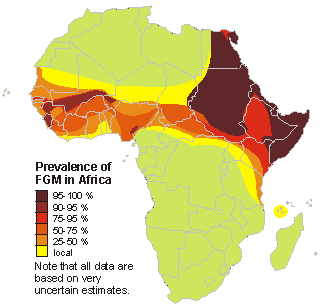
Violence continues to be perpetrated against women in both the public and private spheres. Across the continent women continue to suffer domestic and sexual violence, harmful traditional practices, such as female genital mutilation, widowhood rites, wife inheritance, forced and early marriage. In a number of countries recent escalation of political violence has particularly targeted women. In times of armed conflict, women are often the first victims, with sexual violence used as a weapon of war.
- Weak adherence to international and regional women’s human rights protection instruments: International law requires states to take all necessary measures to end discrimination and ensure respect for women’s human rights. However, whilst almost all African states have ratified the Convention on the elimination of all forms of discrimination against women (CEDAW), 8 states have entered reservations to this Convention, which undermine the very principle of non-discrimination; and 35 states have not ratified its Optional Protocol, which allows individual women to seek redress for violations. Further, 5 years after its adoption, 28 states have still not ratified the Protocol to the African Charter on Human and People's Rights on the Rights of Women in Africa.
- The failure of states to make the necessary legal and political reforms to end violations of women’s human rights: Even states that have adhered to these instruments have so far failed to take the measures required to ensure their implementation. States continue to maintain laws that expressly or indirectly discriminate against women and fail to adopt legislation and policies to protect women from violence and discrimination. Where such laws do exist, violations often go unpunished and impunity prevails. Insufficient efforts are made to raise awareness on women’s human rights and to guarantee access to independent and impartial justice. Many states do not even comply with the obligation to submit periodic reports on the implementation of international and regional instruments, reflecting a serious lack of commitment to protect and promote women's human rights.
RECOGNISING:
- The need for mobilisation: All civil society organisations, both human rights NGOs and women's rights organisations, need to work together to combat discrimination and violence against women, which harm entire societies and future generations.
REITERATE that national governments have the primary responsibility of ensuring respect for women’s human rights. Culture tradition and religion cannot be invoked as justifications for violations of women’s human rights. The elimination of discrimination and violence against women is above all a matter of political will;
HEREBY launch a Campaign to mobilise all African and international actors for the realisation of gender equality and women’s human rights in Africa;
CALL UPON African states to take all necessary measures to ensure respect for women’s human rights, including civil, political, economic, social and cultural rights, and in particular to:
Ratify without reservations the Protocol to the African Charter on Human and People’s Rights on the Rights of Women in Africa, CEDAW and the Optional Protocol to CEDAW;
Bring national legislation in conformity with the provisions of international and regional women’s human rights protection instruments, by abolishing discriminatory laws and adopting laws to protect women’s human rights;
Put in place all necessary measures to ensure the effective application of these laws.
CALL UPON all national, regional and international actors to join the Campaign so that, together, we can achieve gender equality and full respect of women's human rights.
SIGN THE DECLARATION HERE: http://www.africa4womensrights.org/pages/CAMPAIGN-DECLARATION/DECLARATION-DE-CAMPAGNE
Source:
H/T: http://www.wluml.org/english/index.shtml
By Olivier Guitta On Jan. 22, four European tourists - two Swiss, one Briton and one German - were kidnapped at the border of Mali and Niger. The major terrorist group in the region, al-Qaeda in the Islamic Maghreb (AQIM), is very likely behind this operation. This should not come as a surprise. In an article for this publication in March 2008 ("AQIM's new kidnapping strategy"), I had warned about this worrisome new strategy. In fact, North Africa has become in the past two years a major front in the war against radical Islam. While Algeria has witnessed regular attacks and has been in the news a lot, its neighbors have also not been spared by Islamist terrorism. Indeed, Morocco, Tunisia and more recently Mauritania have suffered terror attacks. Read more ...Source: Middle East Times
 February 03, 2009
LIBYAN leader Moamer Kadhafi took the reins of the 53-nation African Union at a summit amid concerns over deadly unrest in Madagascar and a bid to indict Sudan's president for war crimes.
Kadhafi, elected in a closed-door vote at the summit in the Ethiopian capital, vowed to press ahead with plans to create a "United States of Africa'' despite other leaders' reluctance to back his objective.
The summit, which ends today, has been overshadowed by political unrest in Madagascar, torn apart in a power struggle that has killed 68 people so far.
UN Secretary General Ban Ki-moon told the summit he was "particularly concerned'' about the crisis, and urged that all parties "address their differences peacefully and through existing constitutional mechanisms.''
Ban also called on Sudan's President Omar al-Beshir to comply with any action by the International Criminal Court, which is considering whether to indict him for alleged war crimes in Darfur, despite objections from other African leaders.
"He should fully cooperate with the decision of the ICC,'' Ban told a press conference on the sidelines of the summit.
AU Commission President Jean Ping told leaders earlier that the bloc was trying to lobby international support for a 12-month stay in judges' consideration of the request, "to give a greater chance to the peace process''.
Ban hailed moves toward forming a new government in Somalia, and said he would meet later in the day with new president elected last week.
He earlier met with Zimbabwe's President Robert Mugabe, who agreed to allow a high-level UN team to visit the country to assess a worsening humanitarian crisis, with food shortages crippling the nation as a cholera epidemic spreads unchecked.
"The cholera epidemic has reached a very very dangerous and serious point,'' Ban said, adding that he also pushed Mugabe to release political prisoners and guarantee human rights in Zimbabwe.
Ban also noted that the conflict in the Democratic Republic of Congo had taken "a dramatic turn for the better'' following a joint offensive by government and Rwandan forces which led to the arrest of a key rebel leader last month.
But he warned that Africa would face tougher times ahead as nations try to cope with the fallout from the global economic downturn.
"In Africa, its negative effects will not only be on growth, trade and financial flows, but also the fight against poverty and the likelihood of reduced official development assistance,'' Ban said.
Kadhafi's elevation to AU chief stirred debate at the summit, with some nations unhappy about the choice. Under AU rules, the post rotates among Africa's regions, and this year was set to go to a North African leader. Kadhafi was the only one present.
But southern African leaders had lobbied for a leader from their region, as the next summit moves to crisis-hit Madagascar, according to delegates to the summit.
"I hope my term will be a time of serious work and not just words," Kadhafi said in his inaugural speech. Source: The Australian
By Rusty Shackleford A couple of days ago I asked readers to send in tips about al Qaeda in the Islamic Maghreb (AQIM). Ask and ye shall receive. There's some good news and some bad news, which to report first? Let's go with glass half empty. Sean sends in word that AQIM is suspected of kidnapping two Canadian who worked for the UN, Robert Fowler & Louis Guay, and their driver in Niger. Part of a new AQIM strategy to fund its operations. Let's hope these two get out alive and without sending money to AQIM. At least 40 al-Qaeda fanatics died horribly after being struck down with the disease that devastated Europe in the Middle Ages.
The killer bug, also known as the plague, swept through insurgents training at a forest camp in Algeria, North Africa. It came to light when security forces found a body by a roadside.
Now al-Qaeda chiefs fear the plague has been passed to other terror cells — or Taliban fighters in Afghanistan. Read more ... Source: The Jawa Reportal Qaeda in the Islamic Maghreb
Latest recipient of the Evil Dumbass Award

Four Algerians who converted to Christianity have been condemned to prison and heavy fines, while two others were set free after renouncing their conversion. The defence lawyer said the four were charged with "illegally practicing a non-Muslim faith," the French news agency AFP reported. Read more ...Source: Catholic Information Service for Africa
 By Dr. Walid Phares 02 February 08: As Americans are debating who among their candidates for the primaries can best confront the Jihadists or at least preempt their offensives worldwide, future Jihadi forces have in one day invaded an African country (under European protection), a key location for the Darfur forthcoming Peace missions. In less than 12 hours the so-called armed opposition of Chad, crossed the entire country from its Eastern frontiers with Islamist-ruled Sudan to the capital N'Djamena across from Northern Nigeria. The latest reports mention fierce battles around the Presidential Palace and back and forth inside the city. But at this stage the geo-political consequences are crucial for the next stages locally, regionally and internationally. The bottom line is that in one day, what could become the future Taliban of Chad have scored a strategic victory not only against the Government of the country (which was supposed to back up the UN plans to save Darfur in Sudan) but also against the efforts by the African Union and European Union to contain the Sudanese regime and stop the Genocide. Today's offensive, regardless of the next developments, has already changed the geopolitics of Africa. Outmaneuvering the West and Africans, those regimes and forces standing behind the "opposition" have shown that they are restless in their campaign against human rights and self determination on the continent. But even more importantly the events of today shows how unprepared are Europeans and Americans in front of Jihadi regimes which seem weak on the surface but highly able to surprise and crumble Western efforts of containment. Read more ...Source: World Defense Review
 |
|
|
Copyright Muslims Against Sharia 2008. All rights reserved.
E-mail: info AT ReformIslam.org
|
|
|


 The foiled attempt by young Nigerian extremist Umar Farouk Abdulmutallab to blow up Northwest Airlines Flight 253 on Christmas Day has baffled many Africans and sent them scrambling for an explanation.




 Posts


