 By Amie Ferris-Rotman Amie Ferris-rotman GROZNY, Russia (Reuters) – Adam, 52, keeps his three wives in different towns to stop them squabbling, but the white-bearded Chechen adds he might soon take a fourth. "Chechnya is Muslim, so this is our right as men. They (the wives) spend time together, but do not always see eye to eye," said the soft-spoken pensioner, who only gave his first name. Hardline Kremlin-backed leader Ramzan Kadyrov is vying with insurgents for authority in a land ravaged by two secessionist wars with Moscow. Each side is claiming Islam as its flag of legitimacy, each reviles the other as criminal and blasphemous. Wary of the dangers of separatism in a vast country, Moscow watches uneasily as central power yields to Islamic tenets. It must chose what it might see as the lesser of two evils. Though polygamy is illegal in Russia, the southern Muslim region of Chechnya encourages the practice, arguing it is allowed by sharia law and the Koran, Islam's holiest book. By Russian law, Adam is only married to his first wife of 28 years, Zoya, the plump, blue-eyed mother of his three children, with whom he shares a home on the outskirts of the regional capital Grozny. His "marriages" to the other two -- squirreled away in villages nearby -- were carried out in elaborate celebrations and are recognized by Chechen authorities. The head of Chechnya's Center for Spiritual-Moral Education, Vakha Khashkanov, set up by Kadyrov a year ago, said Islam should take priority over laws of the Russian constitution. "If it is allowed in Islam, it is not up for discussion," he told Reuters near Europe's largest mosque, which glistens in central Grozny atop the grounds where the Communist party had its headquarters before the Soviet Union fell in 1991. "As long as you can feed your wives, and there's equality amongst them, then polygamy is allowed in Chechnya," he added. Islam is flourishing in Chechnya which, along with its neighbors Dagestan and Ingushetia, is combating an Islamist insurgency which aims to create a Muslim, sharia-based state separate from Russia across the North Caucasus. Though Islam first arrived in the North Caucasus around 500 years ago, in Dagestan's ancient walled city of Derbent on the Caspian Sea, religion under Communism was strongly discouraged. Kadyrov, like most of his region's one million people, is Sufi, a mystical branch of Islam which places a greater focus on prayer and recitation. Political analysts say that in exchange for successfully hunting out Islamist fighters, the Kremlin turns a blind eye to Kadyrov's Muslim-inspired rules. Today Grozny's cafes hold men sipping smuggled beer out of teacups as alcohol has been all but banned, single-sex schools and gyms are becoming the norm and women must cover their heads in government buildings. Clad in a tight hijab, Asya Malsagova, who advises Kadyrov on human rights issues and heads a state council dealing with the rights of Chechen prisoners, told Reuters: "We believe every woman should have a choice -- but we prefer she covers up." Against the backdrop of a bubbling Islamist insurgency, Islam's revival has also brought violence against those who do not live by sharia law in the North Caucasus -- a region the Kremlin has described as its biggest political domestic problem. Islamist militants, who label Kadyrov and other regional bosses as "infidels" for siding with Moscow, have been behind attacks on women they say worked as prostitutes in Dagestan and murders of alcohol-sellers in Ingushetia. In Chechnya and Ingushetia, rebel fighters who regularly carry out armed attacks on police are celebrated as "martyrs" by Islamist news sites with links to the insurgency. HOLY CAMELS Dirt roads lead the way to Chechnya's first camel farm, about 55 km (34 miles) northwest of Grozny, where 46 of the two-humped creatures munch on salt and grass while they are groomed to be gifts for dowries and religious holidays. Considered holy animals in Islam, they sell for 58,000 roubles ($1,886) each, said Umar Guchigov, the director of the farm, which opened just over a year ago under Kadyrov's command, and plans are in place to build three more in Chechnya. "So many people, simple people, congratulated us for bringing back this ancient tradition," Guchigov said. Animals are also being used to reintroduce Islam at Chechnya's round-the-clock Muslim television channel, where 60 young bearded men and headscarved women create children's programs in large studios adorned with photos of Mecca. A bevy of bumble bees joyfully scream "Salam Alaikum" (Peace be with you) upon entering the studio of Ruslan Ismailov, who is making a full-length cartoon on hi-tech Apple computers for the channel, which is called "Put," meaning "The Way" in Russian. "The bees appeal to children, and they will teach them how to live properly by the Muslim faith," Ismailov said. Set up two years ago by the state and broadcast to thousands across the North Caucasus, instantly becoming one of the top channels in the region, it also features programs for women on how to keep home and reading of the Koran throughout the night. "It's no secret what Chechnya has been through," said the channel's general director Adam Shakhidov, sporting a ginger beard and traditional black velvet cap. "Two wars, the Soviet Union and today's Muslim extremism... it's time to show the true beauty of Sufism and install the basis for sharia," he said. Reuters 
 Tony Halpin | August 18
CARNAGE returned to the Caucasus yesterday when a suicide bomber killed 20 people and wounded 138 by ramming a truck loaded with explosives into a police station in the southern Russian republic of Ingushetia.
The attack in the city of Nazran undermined claims by the Kremlin that it had restored order to the North Caucasus - a region where Islamic militancy is gaining ground in the face of biting poverty and a brutal government crackdown.
The bombing was timed to coincide with morning roll call at the police headquarters, which was devastated in the blast. Prosecutors said that all of the dead and many of the wounded were police.
President Medvedev reacted by dismissing Ingushetia's Interior Minister, declaring on state television that "this terrorist act could have been avoided". He ordered the federal Interior Minister, Rashid Nurgaliyev, to present proposals for toughening security in the region.
"I believe this was not only a result of problems connected to terrorist activities, but also a result of the unsatisfactory performance of the republic's law enforcement agencies," Mr Medvedev said.
In a sign of official desperation over spiralling violence by Islamist militants in the North Caucasus, however, Ingushetia's Kremlin-appointed President lashed out at the West.
Yunus-Bek Yevkurov accused Britain, the US and Israel of fomenting unrest in the region, while also blaming Islamist militants.
"I am miles from believing that Arabs are behind this. There are other more serious forces there...We understand whose interests these are: the United States, Britain, and Israel too," Mr Yevkurov told Russian News Service radio.
"The West will keep seeking to prevent Russia from reviving the former Soviet might."
Prosecutors said that a Russian-made Gazelle truck smashed through a security gate at the police headquarters and sped into a courtyard where officers were lined up for inspection. Police shot at the driver, said Svetlana Gorbakova, a spokeswoman for investigators.
The device left a crater four metres wide and two metres deep. It went off near the police armoury, causing ammunition to explode.
The suicide bomber struck in a densely-populated part of Nazran and the blast smashed windows and damaged balconies in apartment buildings up to 500 metres away. Officials said that at least 10 of the wounded were children.
Rescue workers said that the death toll could rise because they were still searching for people in the rubble of the police building. The scale of the casualties overwhelmed Nazran's medical facilities and an emergency plane was despatched to nearby Beslan to airlift the most critically injured for treatment in Moscow.
The assault undermined the Kremlin's claim to have stabilised the North Caucasus region, which includes Ingushetia, Chechnya and Dagestan. Militants have mounted almost daily attacks on police and Interior Ministry troops since Moscow declared victory in April in its decade-long war to defeat separatists in Chechnya.
Mr Yevkurov, who was badly hurt in an assassination attempt by another suicide bomber in June, said that the latest attack was carried out by Islamist militants who were avenging successful security operations against them along Ingushetia's border with Chechnya. He added: "It was an attempt to destabilise the situation and sow panic."
Ingushetia's construction minister was shot dead in his office last week, and a local Supreme Court Judge was killed shortly before the attempt to assassinate Mr Yevkurov.
President Kadyrov of Chechnya threatened a campaign to "liquidate" militants in Ingushetia, raising fears of a spreading conflict. He said: "We have enough political will and strength to withstand this evil. We have a common enemy and a common goal of neutralising it."
Analysts say that Islamist rebels have found fertile soil for recruitment among young people alienated by deep poverty in Ingushetia and brutal attempts by security forces to suppress dissent. Rights organisations accused Mr Yevkurov's predecessor, Murat Zyazikov, of widespread abuses, including torture and killings by security officials.
Mr Yevkurov threatened to pursue militants relentlessly after he was appointed by Mr Medvedev last October. But he has also set a more conciliatory tone by pledging to punish abuses and crack down on corruption.
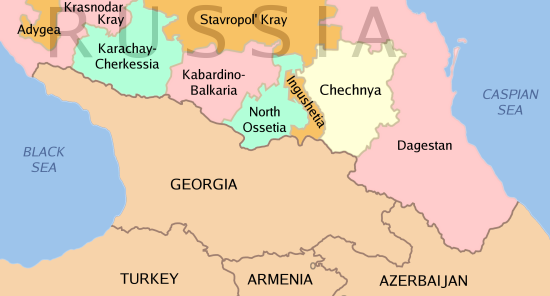
 At least 19 people have been killed and more than 50 others wounded in a suspected suicide attack on a police station in Russia's southern Ingushetia region. The bombing is the latest attack in the mainly Muslim region, which has seen an upsurge in violence in the past few months. The blast occurred after a truck broke through security gates at police headquarters in Nazran, Ingushetia's largest city, as officers gathered for a morning check on Monday, Russian agencies reported. "Practically all the cars and buildings in the yard of the police headquarters were completely destroyed," the Interfax news agency quoted a law-enforcement source as saying. The explosion killed and wounded police officers in the compound and local residents in homes nearby, officials said. At least nine children were said to be among the wounded, Svetlana Gorbakova of the regional branch of the Russian prosecutor general's office said. Rise in violence Kremlin authorities have largely blamed Islamist fighters for recent violence in the region, which lies in Russia's volatile North Caucasus. Shaun Walker, Moscow correspondent for the UK's Independent newspaper, told Al Jazeera that attacks in the region appeared to becoming "nastier and more frequent". "Although there is a lot of violence in this region on a regular basis, it's still relatively unusual to have suicide bombings and a bombing of this scale," he said, adding Monday's attack appeared to be the work of the "local Islamic insurgency". "These attacks have been happening with alarming regularity. What we've seen in the last week or so is a series of slightly larger scale attacks. Taken overall it is a really quite a scary picture for Russia and the leaders of these republics. "In a sense it does seem a little bit like the Caucasus is spiralling out of control." Caucasus bloodshed Last week, Ruslan Amerkhanov, the region's construction minister, was shot dead inside his own office. Yunus-Bek Yevkurov, Ingushetia's president, was badly injured in June after a suicide bomber attacked his car. Moscow has long struggled to impose the Kremlin's authority in the North Caucasus region, which has been the site of two wars in Chechnya and hundreds of violent attacks since the 1991 collapse of the Soviet Union. While large-scale fighting in Chechnya, Ingushetia's neighbour, has ended, rebels continue to mount hit-and-run attacks and skirmishes. Bloodshed has surged in recent months and increasingly spilled into the republic's neighbours. Source: Al Jazeera (English)
Growing lawlessness and Islamist violence in Dagestan, Chechnya and neighbouring Ingushetia are undermining the Kremlin's control of its southern flank.
The attacks are the latest in a sharp upswing in violence against civilians across the region, where a local minister was shot dead in his office earlier this week.
The seven women were shot by rebels at around the same time as separatists attacked and killed four policemen manning a nearby checkpoint in Buinaksk, a town 41 km from the local capital, Makhachkala.
"At least four died when they attacked the traffic police. Around the same time they entered the sauna and shot seven women," a spokesman for local police said.
Separately, four policemen and two separatists died in a shootout in Chechnya, Russian news agencies reported today.
The Chechen deaths occurred in an abandoned house near the capital Grozny, RIA news agency said.
Five other security force officers were also injured in a separate clash in the republic on Thursday, Interfax reported.
On Wednesday, Ingushetia's construction minister was shot at close range in his heavily guarded office.
In Chechnya three human rights activists have been shot and killed in the past month, two earlier this week and one in July.
Authorities say four militants were found dead after an explosion in the violence-plagued Ingushetia province in southern Russia.
The regional interior ministry said a makeshift bomb exploded early Sunday in a car in the Nazran district, killing the four passengers, including a member of a militant group previously convicted for illegal arms possession.
Ingushetia, which borders Chechnya to the west, has been roiled by shootings, bombings and other attacks targeting police and government officials.
The province's Kremlin-appointed president, Yunus-Bek Yevkurov, was critically wounded in a bombing last month. Source: APH/T: Weasel ZippersExploding Ingushi Gihadis
Latest recipients of the Evil Dumbass Award
 Muslims Against Sharia congratulate Ingushi Gihadis with the latest "work accident" and wish for many more happy occurrences in the immediate future. Muslims Against Sharia congratulate Ingushi Gihadis with the latest "work accident" and wish for many more happy occurrences in the immediate future.
 Mr Yevkurov is a decorated Russian military officer Mr Yevkurov is a decorated Russian military officerThe president of the southern Russian republic of Ingushetia has been wounded in an assassination attempt, apparently launched by a suicide bomber. Yunus-Bek Yevkurov is said to be in a critical but stable condition in hospital, with head and chest injuries. Reports said one bodyguard was killed and several others were wounded, after a car travelling at high speed rammed the president's vehicle. Ingushetia, which neighbours Chechnya, has seen violence soar recently. Russian President Dmitry Medvedev called the attack, in the city of Nazran, "an act of terror". He has ordered the interior ministry and the Federal Security Service (FSB) "to fully investigate the attack on the Ingush president's life and to take all the necessary law-enforcement efforts", presidential press secretary Natalya Timakova said. Read more ...Source: BBC
ROSTOV-ON-DON, Russia: Police in the violence-plagued Russian republic of Ingushetia say a bowling alley owner was shot to death by suspected Islamic extremists who oppose games and some other forms of entertainment.
Ingushetia, a predominantly Muslim region, sees near-daily attacks or clashes that authorities blame on insurgents inspired by the years of separatist fighting in neighboring Chechnya.
The Ingush Interior Ministry said the Wednesday night killing in the town of Karabulak was believed to be the work of "fanatics" who have also attacked owners of other entertainment facilities in recent months.
Also Thursday, the ministry said police killed three suspected militants who had stored a large arsenal at a sheep farm. Source: AP
Telnik reports that the Jihadis in Ingushetia have set up a website, Hunafa.com, to serve as an information hub for their activities. Although not as slick as its parent site, KavkazCenter.com, it has the same function. According to Telnik, if the new site remains online and serves its purpose, it will indicate that the Jihadis in Ingushetia are growing stronger. Source: Jihadica
Russia, who is concidered as guarantor in Ingushetia against Georgian violence, fights against civilians of the republic under unnamed struggle. Russia has deployed in Ingushetia with via its intelligence service KGB and special teams under the special operations since 2007. After that Russian terrorism against Muslim public uprised, said World Bulletin columnist Fehin Tastekin in his article whish written following his Ingushetia visit. The Moscow Helsinki Group said on September the federal authorities in the Caucasus republic are engaged in kidnappings, torture and extra-judicial killings. "What's happening there is unthinkable and shouldn't happen in a country which respects the rule of law," MHG president Lyudmila Alexeyeva said at a news conference in Moscow. The group directly accused the Kremlin-backed authorities in the tiny republic of engaging in state-sponsored terror. Read more ...Source: World Bulletin
 The owner of the embattled opposition web site Ingushetiya.ru was killed Sunday after being detained by police, and his supporters promised massive protests that could lead to a sharp escalation in violence in the restive region. Magomed Yevloyev, a prominent opposition member and staunch critic of Ingush President Murat Zyazikov, was detained in Ingushetia's main city of Nazran as he stepped off a plane from Moscow, his lawyer and friend Kaloi Akhilgov said by telephone. He said Yevloyev had flown in business class with Zyazikov, a retired general from the Federal Security Service, and suggested that the two might have quarreled during the flight. Ingush police said they had wanted to question Yevloyev in connection with an investigation into an explosion in Nazran earlier this year, Interfax reported. Once inside the police car, Yevloyev, a Moscow-based lawyer and former investigator in the Ingush Prosecutor's Office, attempted to wrestle an assault rifle away from one of the officers and was accidentally shot in the head during the scuffle, the police said. Read more ...Source: The Moscow Times
 А. Бабицкий
Узнав о смерти Магомеда Евлоева, я почему-то сразу зашел в телефонную книжку в мобильнике и посмотрел его номер, на месте ли он? Строка с его именем вышла на дисплей как ни в чем не бывало, будто все еще вела к живому человеку. Мне даже представилось на мгновение, что если я нажму "набор", то уже через мгновение услышу знакомый голос. Но я не стал звонить, поскольку в моем возрасте уже хватает сил понять, что телефонный звонок не в состоянии никого вернуть к жизни.
Мы встретились впервые несколько месяцев назад на общественном форуме в Хельсинки, хотя до этого часто общались по телефону. Я, помнится, перед встречей ожидал увидеть неутомимого борца, бескомпромиссного и мужественного, который беззаветно верен одной узкой истине и не мыслит себе существования за ее пределами. Сайт "Ингушетия.ру", создателем, владельцем и фактическим редактором был Магомед, не мог служить образцом терпимости и взвешенных подходов, особенно в области межнациональных отношений. Поэтому мне казалось, что пламенные форумы и гневные обличения ингушских властей на сайте - порождение специфического темперамента, аналогом которого мне виделся характер бойца-революционера Национал-большевистской партии Лимонова.
Но все оказалось совсем по-другому. Рейсом из Москвы в аэропорт Праги, в котором я его встречал, прилетел немолодой уже человек, слегка растерянный и сверх всякой меры интеллигентный. В костюме и галстуке, с портфелем он напоминал скорее полузабытый типаж госслужащего советских времен - ровного, деликатного, не желавшего создавать лишних проблем окружающим. Инженер провинциального НИИ или даже мастер на каком-нибудь хиреющем заводе.
Но и первое впечатление тоже было неверным. За внешним скромным обликом бывшего прокурорского работника скрывалась колоссальная жизненная сила и невероятная целеустремленность. За те несколько дней, которые мы провели в одном гостиничном номере, он между делом, сам удивляясь тому, как все сложилось, излагал обстоятельства своей параллельной политической карьеры. Самое главное, судьба оппозиционера не была для него ни желанной, ни осознанной целью. Он, оставив работу в прокуратуре и занявшись бизнесом, даже не предполагал, что жизнь его развернется в этом направлении. Бизнес развивался удачно, и в какой-то момент он решил создать сайт, на котором мог бы выкладывать информацию об истории, культуре, обычаях ингушей. Ничего за границами этой задачи.
Но события задали собственную логику. Очень быстро на сайт, в форумы пришла политика, поскольку проблемы истории и даже культуры после совсем недавних конфликтов приобрели актуальный план и взрывной политический контекст. Каково было содержание обсуждений? Понятно, что, прежде всего, сайт "Ингушетия.ру" стал трибуной для формулирования нескончаемых претензий в адрес осетин и обсуждения последствий осетино-ингушского конфликта. Дальше больше. Постепенно главной темой дискуссий оказывается контртеррористическая операция, в ходе которой сотрудники спецслужб и местных правоохранительных органов похищают и убивают десятки и десятки людей. Пытки, зачистки, аресты представителей оппозиции, гибель случайных людей во время проведения спецопераций - все моментально, в режиме онлайн выкладывается на ленту новостей сайта.
"Ингушетия.ру" быстро превращается в самый посещаемый ресурс на Северном Кавказе. Одновременно власти начинают нешуточную борьбу с сайтом, стараясь закрыть его под любыми предлогами. Против Магомеда и его детища выдвигаются различные обвинения, его объявляют в розыск, на территории Ингушетии за ним ведется настоящая охота. А он продолжает, не особенно скрываясь, летать домой к родителям. Отец берет с него слово оставить оппозиционную деятельность, и он обещает, потому что по обычаю не может пойти против воли родителей. Но слово держит лишь формально. На самом деле его политическим инициативам уже тесно в рамках интернет-ресурса. Магомед участвует в проведении акции "Я не голосовал!" - сборе данных о людях, не участвовавших в парламентских выборах, организует и финансирует сбор подписей за отставку Мурада Зязикова и возвращение в республику Руслана Аушева. Последняя акция оппозиции - сбор подписей за отделение Ингушетии от России не была политическим эпатажем и срывом в безудержный радикализм. Магомед Евлоев так видел ситуацию, он считал, что остановить Зязикова и спецслужбы, убивающие ингушей, можно лишь призвав народ к независимости.
Ингушский президент ненавидел Магомеда до истерики и шизофрении. Ему так и не удалось закрыть сайт путем инициирования уголовных дел. Его люди предлагали за "Ингушетию.ру" полтора миллиона долларов и готовы были увеличить цену. В последнее время Зязиков дошел до публичных упреков в адрес подчиненных ему силовых структур. На правительственных совещаниях он обвинял подчиненных в том, что среди них нет мужчин, которые могли бы остановить Евлоева. Ну вот, мужчины, наконец, нашлись. Настоящие мужчины, не побоявшиеся сделать два выстрела в упор в висок безоружному человеку.
Магомед не был от природы борцом, рыцарем без страха и упрека. Политика захватила его случайно и уже не отпускала до самой смерти. Мне казался очень забавным тот факт, что главный оппозиционер Ингушетии легко мирился с отсутствием порядка у себя на сайте и в среде единомышленников. Он был необычайно терпим к человеческим слабостям сотрудников, которые по разным причинам, часто легкомысленным, выпадали на несколько дней из работы, и легко взваливал на себя их обязанности. Он лишь хмыкал и удивленно разводил руками, даже не думая никого упрекать или наказывать. Я говорил ему, что форумы на его сайте, особенно по осетино-ингушскому конфликту, читать невесело из-за обилия крайних националистических мнений и оценок. Он легко соглашался, однако поделать ничего не мог. У него не было профессиональных навыков редактора, а где брать людей Магомед не знал. Как такой человек стал самой страшной головной болью Мурада Зязикова? Очень просто. При всей своей мягкости он не желал мириться с тем, что он считал геноцидом ингушского народа, при всей спорности такой правовой квалификации.
Все проблемы в прошлом. Магомеда убили. На задержание послали десятки людей, захватили человека, у которого из оружия был только портфель с документами, и расстреляли среди бела дня, на виду у всей Ингушетии. Однако проблемы ингушских и российских властей не только не решены, а наоборот умножены в десятки раз. Инициативы Магомеда Евлоева, в том числе и независимость республики, теперь приобрели цену крови и из абстрактных политических проектов превратились в дело, за которое заплачено жизнью. Теперь у них есть собственная плоть и далекая, невеселая перспектива.
Что касается Зязикова, то смерти Евлоева ему уже не преодолеть - ни как политику, ни как ингушу. Расстреливать политических противников, не пряча следов, даже по меркам нынешнего беспредельного времени - случай исключительный. Кремль до сих пор не считает возможным брать на себя ответственность за насильственную гибель тех, кого он считает врагами, а здесь - неприкрытое, бессовестное, подлейшее убийство. Или надо признавать такое поведение нормой, или же что-то делать с человеком, который занимает пост президента Ингушетии.
А соотечественники не простят, просто потому, что такое прощать не принято. Никому - ни трактористу, ни чиновнику, за которым стоят армия и силовые службы.
Прощай, Магомед! Очень жалко, что тебя больше нет.
Прощай, Мурад Зязиков! Вряд ли дальнейшая судьба человека с таким именем сложится успешно. Source: Ingushetiya.ru
 |
|
|
Copyright Muslims Against Sharia 2008. All rights reserved.
E-mail: info AT ReformIslam.org
|
|
|


 By Amie Ferris-Rotman Amie Ferris-rotman




 Posts
Posts


