By Maayana Miskin United States President Barack Obama issued a stinging condemnation of the Jewish presence in Judea and Samaria on Wednesday in a speech to the United Nations General Assembly.
The U.S. “does not accept the legitimacy of continued Israeli settlements,” Obama announced.Using unusually harsh terminology, Obama called to "end the occupation that began in 1967" - referring to Israel's control of Judea and Samaria. Obama also stated that the U.S. must put more pressure on Israel to accept Arab demands. “The United States does Israel no favors when we fail to couple an unwavering commitment to its security with an insistence that Israel respect the legitimate claims and rights of the Palestinians,” he said. The U.S. president had demands for Israel's opponents as well, and called on UN member states to avoid “vitriolic” attacks on Israel and recognize Israel's legitimacy. In addition, he called on the Palestinian Authority to “end incitement against Israel.” In his speech, Obama reported that progress had been made in a meeting the day before with Prime Minister Binyamin Netanyahu and PA Chairman Mahmoud Abbas. Obama has pressured Israel to completely freeze building for Jews in Judea and Samaria, a plan Netanyahu has rejected. Israeli leaders have stated that many Judea and Samaria communities are within the “national consensus” regarding towns that are expected to remain in Israeli hands permanently, and that building should continue in those areas. The Obama administration's most recent statements on the subject made clear, however, that a freeze on settlements could not be a precondition for peace talks between Israel and the PA. Regarding Iran, Obama expressed support for both diplomacy and consequences. Iran and North Korea should be offered “greater prosperity and a more secure peace” if they agree to abide by international guidelines, but “must be held accountable” if they insist on pursuing nuclear weapons, he said. Bolton: Israel on the Chopping Block
Former United States ambassador to the UN John Bolton said the president's message had strong significance, particularly given the venue. Obama has put Israel “on the chopping block,” Bolton warned. 'World Must Work Together'
Obama called for the nations of the world to work together, saying, “Now is the time for all of us to take our share of responsibility.” "Those who used to chastise America for acting alone in the world cannot now stand by and wait for America to solve the world's problems alone,” he added pointedly. Obama said UN member states had fallen short in addressing the world's problems. Among the issues he called to address were genocide, “protracted conflicts,” nuclear proliferation, and global warming. Source: INN
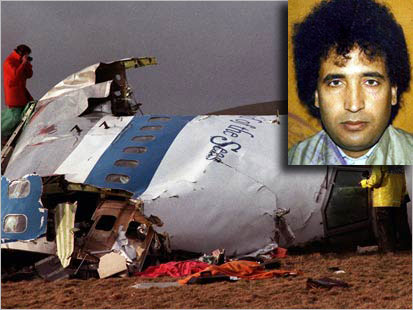 By John Bolton Outrage was the uniform American response to Scotland's release last week of Abdel Baset Ali al-Megrahi, the man convicted of blowing Pan Am 103 out of the sky over Lockerbie in December, 1988. Two hundred and seventy innocent people died in that act of terrorism, of whom 189 were Americans, many of them students on their way home to celebrate Christmas with their families. Outrage also greeted the public celebration of Megrahi's arrival in Libya and his warm reception from Muammar Gaddafi. These manifestations of insensitivity only highlight the shamefulness of Britain's fundamental mistake in letting Megrahi go free, regardless of his condition. "Compassion" has no place here. Releasing him to die at home means that he has spent less than two weeks in jail for each of his 270 victims. They never made it home. The justifiable disgust over Megrahi's release sadly underlines what amounts to a spectacular failure of American diplomacy. "Obamamania" overseas is a dominant theme of the media, endlessly recounting how the US position in the world has improved since President Bush's departure. "Engagement" with friend and adversary alike is the Obama administration's hallmark, with diplomatic advances expected to flow like wine. Read more ...Source: Telegraph
July 5, 2009 | Uzi Mahnaimi in Tel Aviv and Sarah Baxter The head of Mossad, Israel’s overseas intelligence service, has assured Benjamin Netanyahu, its prime minister, that Saudi Arabia would turn a blind eye to Israeli jets flying over the kingdom during any future raid on Iran’s nuclear sites. Earlier this year Meir Dagan, Mossad’s director since 2002, held secret talks with Saudi officials to discuss the possibility. The Israeli press has already carried unconfirmed reports that high-ranking officials, including Ehud Olmert, the former prime minister, held meetings with Saudi colleagues. The reports were denied by Saudi officials. “The Saudis have tacitly agreed to the Israeli air force flying through their airspace on a mission which is supposed to be in the common interests of both Israel and Saudi Arabia,” a diplomatic source said last week. Although the countries have no formal diplomatic relations, an Israeli defence source confirmed that Mossad maintained “working relations” with the Saudis. John Bolton, the former US ambassador to the United Nations who recently visited the Gulf, said it was “entirely logical” for the Israelis to use Saudi airspace. Bolton, who has talked to several Arab leaders, added: “None of them would say anything about it publicly but they would certainly acquiesce in an overflight if the Israelis didn’t trumpet it as a big success.” Arab states would condemn a raid when they spoke at the UN but would be privately relieved to see the threat of an Iranian bomb removed, he said. Referring to the Israeli attack on an alleged Syrian nuclear facility in 2007, Bolton added: “To this day, the Israelis haven’t admitted the specifics but there’s one less nuclear facility in Syria . . .” Recent developments have underscored concerns among moderate Sunni Arab states about the stability of the repressive Shi’ite regime in Tehran and have increased fears that it may emerge as a belligerent nuclear power. “The Saudis are very concerned about an Iranian nuclear bomb, even more than the Israelis,” said a former head of research in Israeli intelligence. The Israeli air force has been training for a possible attack on Iran’s nuclear site at Natanz in the centre of the country and other locations for four years. Source: Times Online
By John R. Bolton | July 2
With Iran's hard-line mullahs and the Islamic Revolutionary Guard Corps unmistakably back in control, Israel's decision of whether to use military force against Tehran's nuclear weapons program is more urgent than ever. Iran's nuclear threat was never in doubt during its presidential campaign, but the post-election resistance raised the possibility of some sort of regime change. That prospect seems lost for the near future or for at least as long as it will take Iran to finalize a deliverable nuclear weapons capability. Accordingly, with no other timely option, the already compelling logic for an Israeli strike is nearly inexorable. Israel is undoubtedly ratcheting forward its decision-making process. President Obama is almost certainly not. He still wants "engagement" (a particularly evocative term now) with Iran's current regime. Last Thursday, the State Department confirmed that Secretary Hillary Clinton spoke to her Russian and Chinese counterparts about "getting Iran back to negotiating on some of these concerns that the international community has." This is precisely the view of Russian Foreign Minister Sergei Lavrov, reflected in the Group of Eight communique the next day. Sen. John Kerry thinks the recent election unpleasantness in Tehran will delay negotiations for only a few weeks. Obama administration sources have opined (anonymously) that Iran will be more eager to negotiate than it was before its election in order to find "acceptance" by the "international community." Some leaks indicated that negotiations had to produce results by the U.N. General Assembly's opening in late September, while others projected that they had until the end of 2009 to show progress. These gauzy scenarios assume that the Tehran regime cares about "acceptance" or is somehow embarrassed by eliminating its enemies. Both propositions are dubious. Obama will nonetheless attempt to jump-start bilateral negotiations with Iran, though time is running out even under the timetables leaked to the media. There are two problems with this approach. First, Tehran isn't going to negotiate in good faith. It hasn't for the past six years with the European Union as our surrogates, and it won't start now. As Clinton said on Tuesday, Iran has "a huge credibility gap" because of its electoral fraud. Second, given Iran's nuclear progress, even if the stronger sanctions Obama has threatened could be agreed upon, they would not prevent Iran from fabricating weapons and delivery systems when it chooses, as it has been striving to do for the past 20 years. Time is too short, and sanctions failed long ago. Only those most theologically committed to negotiation still believe Iran will fully renounce its nuclear program. Unfortunately, the Obama administration has a "Plan B," which would allow Iran to have a "peaceful" civil nuclear power program while publicly "renouncing" the objective of nuclear weapons. Obama would define such an outcome as "success," even though in reality it would hardly be different from what Iran is doing and saying now. A "peaceful" uranium enrichment program, "peaceful" reactors such as Bushehr and "peaceful" heavy-water projects like that under construction at Arak leave Iran with an enormous breakout capability to produce nuclear weapons in very short order. And anyone who believes the Revolutionary Guard Corps will abandon its weaponization and ballistic missile programs probably believes that there was no fraud in Iran's June 12 election. See "huge credibility gap," supra. In short, the stolen election and its tumultuous aftermath have dramatically highlighted the strategic and tactical flaws in Obama's game plan. With regime change off the table for the coming critical period in Iran's nuclear program, Israel's decision on using force is both easier and more urgent. Since there is no likelihood that diplomacy will start or finish in time, or even progress far enough to make any real difference, there is no point waiting for negotiations to play out. In fact, given the near certainty of Obama changing his definition of "success," negotiations represent an even more dangerous trap for Israel. Those who oppose Iran acquiring nuclear weapons are left in the near term with only the option of targeted military force against its weapons facilities. Significantly, the uprising in Iran also makes it more likely that an effective public diplomacy campaign could be waged in the country to explain to Iranians that such an attack is directed against the regime, not against the Iranian people. This was always true, but it has become even more important to make this case emphatically, when the gulf between the Islamic revolution of 1979 and the citizens of Iran has never been clearer or wider. Military action against Iran's nuclear program and the ultimate goal of regime change can be worked together consistently. Otherwise, be prepared for an Iran with nuclear weapons, which some, including Obama advisers, believe could be contained and deterred. That is not a hypothesis we should seek to test in the real world. The cost of error could be fatal. The writer, a senior fellow at the American Enterprise Institute, was U.S. ambassador to the United Nations from August 2005 to December 2006 and is the author of "Surrender Is Not an Option: Defending America at the United Nations and Abroad." Source: Washington Post
 Mladen Andrijasevic As an American citizen I did everything I could to stop this from happening. I voted for McCain. But now in Israel as I watch as Obama appeases the Iranians I wonder if we in Israel will be able to survive.
Obama apparently believes that appeasing totalitarian regimes works. His Nowruz address will become the classic example of such an attempt. But the history of appeasement is not very encouraging. It has not worked with the Nazis, it has not worked with Arafat's regime, and least of all has it worked with the jihadists. For those in Europe who have for years believed that their appeasement has brought them less terror and cheap oil can only look around and see what Europe has become with the recent protests in Luton and Malmo.Is it not better to have some dialogue with Iran? Are there no benefits at all? John Bolton thinks not. The US would survive the collapse of its appeasement policy toward Iran, even the scenario of an EMP attack. Israel would not. Israel should not be made to play the role of a victim of a failed appeasement policy, a learning curve unfortunate error in judgment of a rookie American president. For the lesson learned would have been that an Iranian-Israeli nuclear war would be a disaster not only for Israel but for the US as well. So why make the error in the first place? As an Israeli citizen I therefore voted for those who have already experienced the futility of appeasing the jihadists in more than 15 failed peace process attempts in the last 15 years and who will in protecting Israel's survival be protecting American interests as well. Source: American Thinker
 WASHINGTON, (AFP) – Former US ambassador to the United Nations John Bolton said Monday settling the Arab-Israeli conflict on the basis of a two-state solution was no longer workable and suggested giving the Palestinian territories to Egypt and Jordan.
"Let's start by recognizing that trying to create a Palestinian Authority from the old PLO has failed and that any two-state solution based on the PA is stillborn," Bolton wrote in The Washington Post.
"Hamas has killed the idea, and even the Holy Land is good for only one resurrection."
A two-state solution has been officially adopted as the basis for solving the Middle East conflict by all interested parties, including Israel and the administration of US President George W. Bush, in which Bolton has served.
But Bolton now argues that the Middle East peace process is "obviously not progressing... probably going backward" while the US- and UN-backed "road map" for peace has still to show results.
"Instead, we should look to a 'three-state' approach, where Gaza is returned to Egyptian control and the West Bank in some configuration reverts to Jordanian sovereignty," says the former ambassador, who now works for the American Enterprise Institute, a conservative think tank in Washington.
"Having the two Arab states re-extend their prior political authority is an authentic way to extend the zone of peace and, more important, build on governments that are providing peace and stability in their own countries," he concluded.
Meanwhile, The Wall Street Journal says in an editorial that a nation like Israel "must maintain an aura of invincibility" if it is to have any chance at peaceful co-existence with its Arab neighbors.
"It was that aura after two wars that induced Egypt to agree to peace with Israel in the 1970s," The Journal argued.
"By contrast, the 2006 Lebanon campaign convinced radical Arabs and Persians that Israel had grown soft and could be beaten. Israel can't let Hamas maintain a similar mythology at the end of this operation, or the costs will be far higher down the road." Source: AFP
Military action against Iran would be a last resort but the United States and its allies have not done enough to promote the alternative, a former U.S. ambassador to the United Nations said on Wednesday. John Bolton, who was a leading hawk in President George W. Bush's administration, told an audience at the Hay literary Festival that five years of "failed" negotiation with Iran over its nuclear program had left just two options for dealing with the issue — regime change and use of force. "The use of military force is an extremely unattractive option and only to be used as a last resort," he said, adding he would favor regime change. Bolton said the elements for regime change were present in Iran — the economy was in difficulties, young Iranians could see the possibility of a different life and there were ethnic tensions within the country. Read more ...Source: Reuters
 |
|
|
Copyright Muslims Against Sharia 2008. All rights reserved.
E-mail: info AT ReformIslam.org
|
|
|


 Posts


