 RELATIVES of the 52 people killed in the 7/7 London bombings reacted with anger yesterday after they were told the inquests will also include the legal examination of the deaths of the four suicide bombers who killed them. RELATIVES of the 52 people killed in the 7/7 London bombings reacted with anger yesterday after they were told the inquests will also include the legal examination of the deaths of the four suicide bombers who killed them. Lady Justice Hallett, the specially appointed coroner, said that the long delayed hearings would also cover the deaths of Mohammad Sidique Khan and his accomplices.
Graham Foulkes, whose son David, 22, died in the attacks, told The Times: "She told us that the inquests will have to include the bombers because it was the same event. I'm absolutely gutted about that. I hadn't expected that at all."
The families were also upset to learn that the inquests, to be held next year, could take place in partial secrecy under controversial new legislation and that they were not necessarily entitled to legal aid to appoint lawyers.
Representatives of some of the families were called to a meeting with Lady Hallett, an Appeal Court judge, in London and they emerged with concerns that she had been unable to answer many questions. The families have campaigned unsuccessfully for a public inquiry into the bombings to answer questions about what security services knew of Khan and his fellow terrorists.
 An Islamic preacher who gave email advice to Major Nidal Hasan, the gunman in the Fort Hood massacre that left 13 dead, also inspired the July 7 London bombers and a number of other British terrorists, The Daily Telegraph can disclose. An Islamic preacher who gave email advice to Major Nidal Hasan, the gunman in the Fort Hood massacre that left 13 dead, also inspired the July 7 London bombers and a number of other British terrorists, The Daily Telegraph can disclose. Lectures by Anwar al-Awlaki were found in the Iqra bookshop in Leeds, where the July 7 bombers held meetings. His lectures were also found among the material seized from a jihadist recruiter, Aabid Hussain Khan, from Bradford, West Yorkshire, who groomed Britain's youngest terrorist, schoolboy Hammaad Munshi, then 15. Al-Awlaki , 38, a US citizen, fled from the country to live in Britain after it was disclosed that three of the September 11 hijackers had worshipped at two different mosques where he preached. He moved to Yemen in 2004, where he was arrested and then went underground, but he has been invited to give video lectures, most recently at East London Mosque in January, and his videos are still on sale in Britain. Major Hasan, an army psychiatrist, worshipped at a mosque in Virginia where al-Awlak was imam at the same time as two Sept 11 hijackers. Hasan, 39, has been charged with 13 murders. He shouted "allahu akbar" ("God is great") and shot dead unarmed soldiers awaiting vaccinations before or after deployment. He is lying in a military hospital bed, paralysed from the waist down, after civilian police officers shot him to end the rampage. It has since emerged that US intelligence monitored email correspondence during the past two years between the officer and the imam. Hasan asked advice on jihad and whether it was permissible to kill innocent people in a suicide attack. Al-Awlaki's most influential lecture, Constants on the Path to Jihad, is based on a 2005 book by Yousef al-Ayyiri, the founder of al-Qaeda in Saudi Arabia. According to Evan Kohlmann, a US terrorism consultant, the sermon was "a 'virtual bible' for lone-wolf Muslim extremists". Earlier this year, al-Awlaki also published 44 Ways to Support Jihad, a practical point-by-point guide to pursuing or supporting holy war. "Constants spells out al-Qaeda's home-grown terror strategy," said Mr Kohlmann. "Al-Awlaki didn't just translate it, he applied its teachings for a Western audience. So when Ayyiri stated 'jihad is everywhere', al-Awlaki explained that meant jihad was in Europe too.
This is a very clever individual who understands the power of the Internet to radicalise people. Had al-Awlaki not translated Constants, then most of the Western Muslims who were inspired by it would never have even heard of it." Al-Awlaki 's lectures were also found on a CD belonging to Mohammed Atif Siddique, 22, from Glasgow, an aspiring suicide bomber, who was found guilty of possessing bomb-making instructions. Telegraph 
 Muted mainstream political reaction to recent Guardian and Institute for Race Relations (IRR) reports concerning allegations of "violations of privacy and professional norms of confidentiality" in connection with the UK government's Prevent (Preventing Violent Extremism) programme is revealing. Muted mainstream political reaction to recent Guardian and Institute for Race Relations (IRR) reports concerning allegations of "violations of privacy and professional norms of confidentiality" in connection with the UK government's Prevent (Preventing Violent Extremism) programme is revealing. Politicians and commentators who have been falling over each other to express outrage against Nick Griffin, the leader of the far-right British National Party (BNP), who appeared on the BBC's flagship Question Time for the first time last week, have remained conspicuously silent on the important issues raised in the two reports.
Crucially the Guardian's Vikram Dodd and IRR's Arun Kundnani interviewed ordinary British Muslims in their research. The concerns and fears expressed by these Muslims about the extent to which the Prevent programme might infringe Muslim civil liberties deserve to be taken seriously in Westminster. However, it was not an issue deemed worthy for discussion on Question Time. Instead those British Muslim viewers already fearful of being stigmatised as a suspect community will have noted with concern how Griffin was constantly attacked by his Westminster co-panelists as a racist while his attacks on Islam and Muslims went largely unchallenged. This is significant. Griffin has successfully lifted the BNP from the political gutter by singling out Muslims for attack. His first publication on the topic pre-dates 9/11 and throughout the last decade he has maintained a steadfast campaign against Muslim targets. While it is a tribute to the fairness of the overwhelming majority of British citizens that BNP's electoral successes have been as small as they have so far, it is to the shame of many in Westminster that they have provided much of the fuel for Griffin's rise. This is the same fuel first used by Tony Blair and George Bush to propel the war on terror. At all points Griffin agrees with Blair that the suicide bomb attacks on 9/11 and 7/7, along with those attempts successfully thwarted by British security services and police, are motivated by an evil ideology inherent to what they both call radical Islam. Both Griffin and Blair deny Muslims any political identity based on their religion and suggest that its removal is a key part of a strategy to tackle the root causes of the significant terrorist threat in Britain. Blair's legacy to his successor Gordon Brown was to extend this thinking into the Prevent programme. Thus the outstanding efforts of many grass roots Muslim community projects tackling al-Qaeda inspired propaganda and influence (both with and without Prevent funding) have always been at risk from Blair's diagnosis of the problem. The extent to which this inaccurate diagnosis impacts on Prevent was revealed in Ed Husain's response to Vikram Dodd's report. As co-director of the Prevent-funded Quilliam Foundation, Husain argues that Prevent should target Muslims he describes as Islamists whether or not they are suspected of terrorism or violent extremism. Read more here,,,, Source: Al Jazeera (English)
 When British businessman Imran Ahmad was made redundant in January, instead of hitting the Job Centre he decided to arrange a one-man speaking tour of the United States to spread his message of peace and Muslim moderateness. When British businessman Imran Ahmad was made redundant in January, instead of hitting the Job Centre he decided to arrange a one-man speaking tour of the United States to spread his message of peace and Muslim moderateness. "Do you think the American drone raids in Afghanistan, in which women and children are killed, are actually obstructing the movement for an Islamic reformation?" "What can be done about the alienation of young Muslim men in the UK?" "Did you learn English in England?" I've had an interesting range of questions at my speaking events in the US, but thankfully there have been some laughs with the audience too. But first things first: what am I doing with a rented hybrid car on a 12,000-mile, 40-city speaking tour of America? I'd always been grateful that Britain, the land of my upbringing, had remained remarkably tolerant of Muslims despite the shock of the 7 July bombings and continuing provocation from some extremist elements. I think there's still a good general understanding in the UK that the actions of a few do not represent all Muslims. But I wasn't sure the same could be said for the United States - a country where I'd lived for five years and for which I'd always had great affection. There had been a dreadful incident on New Year's Day this year in which nine Muslims - all US citizens, including three young children - had been removed from a domestic flight because two of them had been overheard discussing where was the safest place to sit on an aeroplane. The FBI had been called in, the "suspects" questioned and the airline had initially refused to rebook them even after they were released without charge. My own experience of the US had been formed in the years immediately before 9/11, when I'd lived there. Religion and ethnicity had never been an issue. Contrast this with the years since the 2001 attacks, when, on each visit, I'd been detained for "secondary" questioning at immigration control… sometimes for hours. I don't blame them for this, given the circumstances. But it still had made me sad. Read more here,,,, Source: BBC H/T: GH
 LONDON — Britain's domestic spy service thinks the threat from Islamist terrorism has stopped growing but remains severe, with terrorists eager to acquire weapons of mass destruction, according to the first authorized history of the agency. LONDON — Britain's domestic spy service thinks the threat from Islamist terrorism has stopped growing but remains severe, with terrorists eager to acquire weapons of mass destruction, according to the first authorized history of the agency. "The Defence of the Realm," by Cambridge University historian Christopher Andrew, was commissioned by the agency, MI5, to mark its 100th anniversary this year -- the first time a major intelligence agency has granted an outsider access to its secret files. The 1,000-page volume, published Monday, describes an organization that fought Hitler with stunning success but struggled to combat Soviet espionage during the Cold War and initially failed to grasp the threat from Islamic extremism. Andrew claims MI5 was "slow to see the coming menace of Islamist terrorism." The book says the agency's then-head, Stella Rimington, had never heard the name Al Qaeda until a meeting in Washington in 1996, during which MI5 representatives were "taken aback by the interest" in Osama bin Laden shown by the Americans. That changed with the Sept. 11, 2001 attacks. Since then MI5 has foiled several major terrorist plots against Britain, including a plan to blow up trans-Atlantic airliners using liquid explosives, for which several British Muslims were sentenced to life in prison last month. It failed to stop the July 7, 2005 London transit bombings, which killed 52 bus and subway passengers, and Andrew said Al Qaeda-inspired terrorists remain determined to kill even more people with chemical, biological or nuclear weapons. Read more here,,,, Source: FoxNews
 Tim Reid in Washington
A series of undercover sting operations in the US has resulted in arrests in four unrelated terror bomb plots across America, raising concerns of another attack on US soil. While the FBI continues to question Najibullah Zazi, an Afghan-born Denver resident accused of plotting the biggest terror attack since the September 11 atrocity, arrests were also made in Illinois and Dallas, and an investigation was widened in North Carolina. A 19-year-old Jordanian, Hosam Maher Husein Smadi, was arrested after allegedly placing what he thought was a bomb at a Dallas skyscraper. The decoy device was provided by an undercover FBI agent. In Springfield, Illinois, Michael Finton, 29, was arrested after allegedly trying to detonate what he thought was a bomb outside a federal courthouse. The FBI had infiltrated the plot months ago. Two North Carolina men under arrest since July on international terrorism charges have also been accused of plotting to kill US military personnel in America. Source: Times Online
 The British government has condemned former London mayor Ken Livingstone for his interview with Hamas head Khaled Mashaal, published in a UK current affairs publication on Friday. The British government has condemned former London mayor Ken Livingstone for his interview with Hamas head Khaled Mashaal, published in a UK current affairs publication on Friday. Foreign Office Minister Ivan Lewis accused Livingstone of handing a "propaganda coup to the leader of a terrorist organization" after an interview with the Hamas leader, who lives in exile in Damascus, appeared in the latest edition of the left-wing political weekly New Statesman. "Ken Livingstone rightly earned praise for his strong and responsible leadership in the aftermath of the 7/7 attacks on London," Lewis said on Friday. "It is therefore particularly regrettable that he learned the wrong lessons from history by handing a propaganda coup to the leader of a terrorist organization." Britain, along with the European Union and US, deems Hamas a terrorist group and has pledged to isolate it until it adopts the Quartet principles - recognizing Israel, renouncing violence and accepting previous interim peace accords. "Hamas has not only breached international law by firing rockets at civilian populations in Israel but continues to violate the human rights of Palestinians in Gaza," Lewis added. New Statesman described the interview as a "world exclusive." Popular UK blog "Harry's Place" disagreed saying it was an exclusive "only in the sense that no other mainstream publication in the world would print it." Relations between Livingstone and the Jewish community deteriorated during his time as mayor following a number of incidents, including an invitation to a Muslim cleric who condoned Palestinian suicide bombers. In 2005 Livingstone likened a Jewish journalist to a Nazi concentration camp guard and refused to apologize. The following year, after disagreement over a building project, he suggested that Indian-born Jewish property developers, the Rueben brothers, should "go back to Iran and see if they can do better under the ayatollahs." He claimed later he did not know the Ruebens were Jewish. New Statesman has also had a strained relationship with the Jewish community over the years. In 2002, the weekly was accused of anti-Semitism when it published a story under the title "A Kosher Conspiracy?" The cover was illustrated with a gold Star of David piercing and dominating a UK flag. In 2007, the magazine compared the Marva and Gadna IDF youth programs to Islamic Jihad "summer camps." In 2006, it sponsored the planting of new olive trees in Palestinian areas as an incentive to subscribe to the magazine. Source: JPost
 By Adam Aspinall A LEADING Muslim MP has called for the chairman of Birmingham Central Mosque to resign after the cleric suggested the July 7 London bombings were a Government conspiracy. Dr Mohammed Naseem’s inflammatory views were exposed after he distributed thousands of copies of the conspiracy film 7/7 Ripple Effect to worshippers at the Mosque. Birmingham MP Khalid Mahmood last night insisted that Naseem should quit his high-profile role for insulting the memory of the 52 people who died in terror attacks on the capital’s transport network four years ago. The 7/7 Ripple Effect film argues that the Government planned the suicide bombings to incite hatred against British Muslims. The film was produced by John Hill, a conspiracy theorist from Sheffield, who now lives in Ireland. Hill, who believes he is the second coming of Christ, is now facing extradition to the UK on a charge of perverting the course of justice for sending the DVD to the judge in a trial linked to the attacks. When confronted by the Sunday Mercury, Dr Naseem initially denied he believed in the conspiracy, and said that a documentary about the “Ripple Effect” theory aired last week had misrepresented him. But when pressed, the 83-year-old told our reporter that he DOES think the Government has something to hide. Read more ...Source: Sunday MercuryH/T: Weasel ZippersMohammed Naseem
Latest recipient of the Distinguished Islamofascist Award

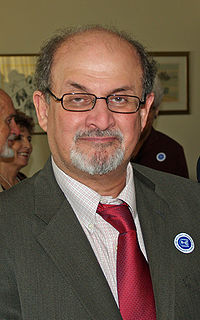 Alice Thomson and Rachel Sylvester | February 05
It is 20 years since Salman Rushdie published his fourth novel, The Satanic Verses, about two Indian actors, Gibreel and Saladin. Within weeks Islamist groups were accusing the writer of blasphemy and burning effigies of him in the streets. On February 14, 1989, Ayatollah Khomeini issued a fatwa against him, calling for his death, forcing him into hiding for nearly a decade and turning him into one of the most famous authors in the world.
With hindsight, Rushdie says, he realises the fatwa was merely the prologue in a very long novel that is becoming ever more terrifying.
On September 11, 2001, one of his three favourite cities, New York, was attacked, four years later his adopted home of London was targeted by suicide bombers and last year, Mumbai, the city of his birth, was overwhelmed by extremists intent on causing havoc.
The West, he thinks, should have realised the fatwa was just the beginning of a new era. "There was a tendency from everybody to believe that it was an isolated incident rather than an indicator or something wider, to believe that it was all my fault," he says.
He is not worried about the anniversary. "I am sure there will be some nasty noises but there are nasty noises every year." But as someone who has lived much of his life under the shadow of fundamentalism, he believes successive British governments have pursued the wrong policy over religious extremists. "This country became the safe haven for every extremist group in the world. It was idiocy, idiocy," he says.
Rushdie has always been riveted by the disruptions and migrations between the Eastern and Western world, and his latest book, The Enchantress of Florence, brings together the extravagant Islamic Mogul empire and the equally extraordinary Florentine world of Machiavelli.
"I thought the thing that would be interesting was how different the two worlds were. I kept finding echoes. Both cultures were very hedonistic, both trying to choose between a puritanical and secularist view," he says.
There are, of course, striking parallels with the rising tensions between East and West in this century. Rushdie is not convinced that there is a clash of civilisations between Islam and Christianity. "There is a kind of Islam which is at war with an idea of the West but neither the West nor the Muslim world is monolithic," he says.
He watched with horror as flames tore through the Taj Mahal Palace hotel in Mumbai. "Those are the streets I grew up on. Two of the characters in my novel Midnight's Children consummate their love affair in the Palace, as so many of us did." His voice trails off for a moment. "It is strange that the three cities in my life that I have loved have all been subjected to terrorist attack in the last 10years."
The people of Mumbai showed extraordinary courage under attack, he says, but now the overwhelming mood is of great anger. "There is no question that this was Pakistan. You could see it as an act of war. The West should be tougher on Pakistan. It is trying to play both ends against the middle: to look like the friend of the revolutionaries on the one hand and a friend of the West in the fight against terrorism. It can't be both things. (Britain) should make clear that as long as Pakistan harbours terrorists it's not going to get any Western aid."
In his view Britain has been far too complacent about the rise of extremism. "Both Thatcher and Blair made the same mistake, which was the so-called Londonistan policy where you allow these (Islamist) groups to set up shop here in the belief that if you do that they won't attack this country and that you can monitor them."
Labour became much tougher on suspected terrorists after 9/11, raising concerns that civil liberties were being brushed aside.
"The War on Terror was always a terrible phrase," Rushdie says. "You are never going to defeat terror. But I sometimes think that liberal opinion in this country doesn't see that there actually are enemies. We just saw in Mumbai a demonstration of the extraordinary barbarism that people are prepared to unleash on the world. How many of these attacks do we need before we understand what's going on?"
There can be few people who feel the threat of fundamentalism more keenly than Rushdie. He lived with the threat of assassination for nine years but he does not regret writing The Satanic Verses. "Of course I don't, why would I? But I'm pleased that finally it's being read like a book. It used to be taught on politics and religion courses; now it's getting taught on fiction courses."
Some people would think of the time in hiding as missing years but he says: "You never really lose your time because if you are any good as a writer you learn from whatever happens to you. I met a lot of men of power in those years, so when I have to set out to create one I have quite a lot of models in my head."
There are, he tells us, many myths about his time in hiding. "I have read that I slept in 56 beds in three months. But for seven of the nine years I lived in the same house."
He hates the idea that he was sponging off the state, pointing out that he was never given a government safe house. "They told me I couldn't live at home and I had to find somewhere else to live and pay for it."
It is hard to imagine what he did when he was hidden away for nine years. "Like everybody else I played a computer game or two ... Martin (Amis) had these poker nights."
His would, he admits, be an extraordinary autobiography. "I have the Chinese curse of living in interesting times." He was deeply hurt when a former driver tried to publish a book last year in which he made many false allegations including suggesting that Rushdie was suicidal and did not get on with his protection officers. "Somebody tried to make a few bucks by telling a bunch of total lies. One of these days I will have to tell the story because otherwise I am going to be constantly vulnerable."
Rushdie is baffled by the hostility he inspires among some. "People can be very generous or very unfair and you never know which way they are going to go. Many of my friends were extraordinary in that period (in hiding). But there was also this surprising level of media hostility that still goes on. The subtext being: it's his own fault, he made the mistake of living and now he appears to be having a good time. He ought to be sitting inpenance."
The man once forced to be a recluse is now portrayed as a party animal, a favourite for the paparazzi, because he often has a beautiful woman on his arm.
At times he has played to the camera - he had a cameo role in the film Bridget Jones's Diary, and appeared in a music video with Scarlett Johansson - but he remains uncomfortable with the idea of celebrity. "Everybody goes to parties; it's just that when I go to parties they are always in the press." After four failed marriages, he says he has no intention of tying the knot again. "I'm not saying I am never going to fall in love again but there is no need to marry." Nor does he want any more children. "I'm 61, enough already." His latest project, however, is a children's book. "When I wrote my last children's book my oldest son was 11. He's 29 now. I have another 11-year-old now who wants a book. I read him the first 15 pages and he liked it."
He is fascinated by the success of the Harry Potter books. "The conventional thought about children's books was to keep them short; J.K. Rowling turned that on its head." Publishers, he thinks, should be more willing to challenge readers, whatever their age. "The whole world is commercial, including publishing. There's been a kind of bestselleritis ... If anyone likes my books, I am happy. I don't mind if they don't."
He is not a fan of misery lit. "At its best it's as interesting as any other form. The trouble is, at its worst it does become this kind ofblurt."
The literary world has changed since he started writing. "In the late '70s to late '80s there was a real desire for originality and a lot of us benefited from that - Angela Carter, Martin Amis, Ian McEwan, me."
The man who last year won the Best of the Booker for Midnight's Children says the British obsession with prizes baffles him. "They've become a marketing device, a way of selling books."
The Orange Prize for women is in his view patronising. "This is one world where women can more than hold their own and you don't need to create a ghetto."
He believes longevity is more important than instant success. If he submitted a manuscript to a publisher now, however, he doubts it would be accepted. "I wouldn't like to be starting now," he says. "I was lucky to get published in the first place." Source: The Australian
By Nick Cohen Far in the distance, a protracted scream comes out of a dark tunnel. As it rises, the ground begins to shake. A dot of light speeds towards the viewer. In seconds, it fills the screen and a rattling blur of the cold steel shrieks past the camera. The action cuts to the forecourt of King's Cross station. Hasib Hussein, a gawky 18-year-old with soft eyes, looks imploringly at the authoritative figure of Sidique Khan. "Sidique ... wait ... ," he says, with a voice full of fear and uncertainty. The older man calms the boy with a bear hug. "There is nothing to fear in death, Hasib," he says. "When the time comes, we'll face towards Makkah together, as one." He looks Hussein in the eyes. "Our lives begin today." Read more ...Source: Standpoint
 A bomb-damaged Circle Line subway train A bomb-damaged Circle Line subway trainA party is being held at the grave of a 7/7 bomber in what is being seen as an insult to the 52 London commuters murdered three years ago today. The family of Shehzad Tanweer and 400 guests will 'celebrate his life' and 'remember him as a martyr' at a village in Pakistan. Tanweer, 22, along with Mohammad Sidique Khan, 30, Hasib Hussain, 18, and 19-year-old Jermaine Lindsay, died when they detonated rucksack bombs on three crowded Tube trains and a No.30 bus. Tanweer's uncle, 42-year-old property developer Tahir Pervez, is organising the celebration in which verses of the Koran will be read out then curry and rice distributed at his home in Samundari. 'The party is kept very secret from people outside the village but everyone knows it happens every year,' said one villager who asked not be named. 'People are invited to join in blessing Shehzad Tanweer's soul by reading verses from the Koran and they call on us to remember Shehzad as a shahid (martyr).' The gathering has twice been held in secret - yards from Aldgate bomber Tanweer's grave which is fiercely protected from outsiders. It is the largest in the cemetery of the village called Chak 477 and is opposite the mosque. Read more ...Source: Daily MailShehzad Tanweer & His Family
Latest recipients of the Distinguished Islamofascist Award
 Shehzad Tanweer Martyrdom Party: a perfect target for a cruise missile!
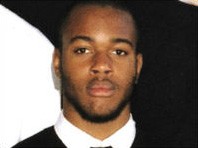 Germaine Maurice Lindsay, also known as Germaine Maurice Lindsay, also known as
Abdullah Shaheed Jamal, was one of four
terrorists who detonated bombs on the
London Underground and on a bus in
central London, July 7, 2005, killing
fifty-six (including themselves) and
injuring more than 700. Lindsay, who
changed his name after his conversion
to Islam, was born in Jamaica.By Milena Uhlmann Conversion to Islam among native Europeans is on the rise. Many converts live at peace within their native societies; some convert only for marriage, and reject neither contemporary culture nor Europe's Judeo-Christian values. A minority, however, embraces radical interpretations of Islam and can pose a security risk. The involvement of Muslim converts in recent terrorist attacks has raised concern in Europe about these "converts to terrorism." While intelligence agencies and security services track international communications and guard borders, such homegrown terrorists pose just as potent a threat to the security of Western democracies. European security services and politicians remain unprepared to handle this growing phenomenon. A Growing ProblemIn Europe, there is very little hard data on conversion to Islam due to the difficulty of gathering proper statistics. Because Muslim communities usually have an informal structure and no formal clergy, most do not keep records. In France, for instance, state agencies do not record citizens' religious affiliations; to do so, French officials say, would counter France's commitment to secularism. In German registration offices, Muslim residents are included in a pool of "diverse religious affiliations." German converts apparently account for only a small portion—between 12,000 and 100,000—of Germany's total Muslim population of 2.8-3.2 million, which itself comprises less than 4 percent of the total population of Germany. In 2006, the Federal Ministry of the Interior commissioned a study from the Zentralinstitut Islam-Archiv Deutschland (ZIIAD) to determine the number of converts, but amid suspicion over the ZIIAD's methodology, discounted as exaggerated its findings and ended its relationship with the institute. Read more ...Source: Middle East Quarterly
By Adrian Morgan Dominic Whiteman has been European Director of the private intelligence-gathering network, VIGIL www.vigilnetwork.com since its inception in 2005. VIGIL was set up in the wake of the 7/7 London al Qaeda attacks by Dominic Whiteman and others, originally to form a bridge between former military and intelligence personnel and the authorities. VIGIL soon became an international network of experts - ranging from linguistic experts to banking experts - and involved itself in the secret provision of intelligence to mostly British and American authorities with the aim of preventing extremism and terrorism. During his time as head of VIGIL Europe, some changes have happened, particularly in British society: the extreme Islamist sect Hizb ut-Tahrir has come closer to being banned, legislation has been changed on UK libraries' stocking of extreme literature and Tamil Tiger funding networks and their kingpins across Europe have come to the attention of the police. Read more ...Source: Family Security MattersH/T: Gramfan
 |
|
|
Copyright Muslims Against Sharia 2008. All rights reserved.
E-mail: info AT ReformIslam.org
|
|
|


 RELATIVES of the 52 people killed in the 7/7 London bombings reacted with anger yesterday after they were told the inquests will also include the legal examination of the deaths of the four suicide bombers who killed them.


 Posts
Posts


