 The Pakistani Taliban has released an audiotape which it says is proof that Hakimullah Mehsud, ( pictured), its leader, was not killed in a US missile attack earlier this week. The Pakistani Taliban has released an audiotape which it says is proof that Hakimullah Mehsud, ( pictured), its leader, was not killed in a US missile attack earlier this week. The tape, purportedly carrying the voice of Mehsud, condemned the rumours of his death, but made no reference to the raid which killed 18 people in North Waziristan. "Sometimes they [the government] launch propaganda about my martyrdom through media and sometimes they say that the operation has been completed in South Waziristan," the recording, released to media on Friday, said. "This can never happen," it continued, referring to military operations against Taliban strongholds launched last year. Reporters familiar with Mehsud said the voice appeared to be his, but it was impossible to confirm if it was recorded before or after Thursday's raid. Mehsud is know to have recorded a number of similar tapes after an attempt on his life in October. Conflicting reports emerged from intelligence agents and security officials on Friday, with some saying Mehsud was injured, while others said the he and some of his senior commanders were probably killed. "So far we do not have confirmation of him either getting killed or getting injured. It will take a little more time to confirm this or otherwise," Major-General Athar Abbas, a military spokesman, told the AFP news agency. The Taliban has issued a number of statements denying Mehsud's death, and Azam Tariq, one of their spokesmen, said his boss had left the Shaktoi area struck by the missiles "40 to 60 minutes" before the raid. "Hakimullah is alive and safe. I met with him last night, there was not even a scratch on him," Tariq told AFP on Friday. Mehsud took over as leader of the Pakistani Taliban five months ago, after Baitullah Mehsud, his predecessor, was killed in a US drone attack. The Taliban denied Baitullah Mehsud's death for weeks, apparently amid fierce infighting over his successor. The "Mehsud audiotape" was released against a backdrop of continued violence in different parts of Pakistan. A suicide bomber attacked a military vehicle in the southern part of Pakistani-administered Kashmir on Saturday, killing two soldiers, security officials said. The bomber attacked the vehicle as it was travelling near the town of Rawalakot, the officials said. "It was a suicide blast, the target was an army vehicle," Sardar Khurshid, a senior police official, told the AFP news agency by telephone. Chaudhry Raqeeb, a senior administrative official, told AFP: "Two security personnel have been injured. The injured were immediately shifted to the nearby hospital." On December 27, a suicide bomber killed seven people outside a Shia Muslim mosque in Muzaffarabad, the capital of Pakistani Kashmir. The Kashmir bombing followed US drone raids in North Waziristan in which at least five fighters were killed. One of those killed on Friday was on the FBI's most-wanted list, Pakistani intelligence officials said. Jamal Saeed Abdul Rahim was reportedly wanted for his alleged role in a deadly 1986
plane hijacking and had a $5 million bounty on his head. The FBI's website identifies him as a Palestinian with possible Lebanese citizenship, who was a member of the armed Palestinian group Abu Nidal. The Pakistani officials called him an al-Qaeda member. Al Jazeera 
 At least 26 people have been killed in an attack by armed men at a mosque in the garrison city of Rawalpindi. At least 26 people have been killed in an attack by armed men at a mosque in the garrison city of Rawalpindi. Police said armed men stormed a mosque during prayers on Friday, following an explosion at a checkpoint near the city's military headquarters. Pakistan's Geo TV reported a witness as saying armed men threw grenades into the mosque. Rao Iqbal, the Rawalpindi police chief, said that at least 26 people have been killed and more than 30 wounded. Al Jazeera's Imran Khan, reporting from the scene, said that the military had secured the area and that at least one helicopter was being used to search for the attackers. "There were apparently eight attackers," he reported. "Three of them died and the others are supposed to be in the vicinity." Major General Athar Abbas, the Pakistani military spokesman, confirmed the attacks but said he had no details on casualties. "There have been killings. Bodies are shifted to the hospital but we don't know exactly how many," he was quoted by the AFP news agency as saying. "It was an attack at a mosque in an area officers frequent." The attack appeared to be the latest in a series to hit Pakistan in recent months as its military presses ahead with an offensive against al-Qaeda and the Taliban in the country's northwest. Al Jazeera
 KHAR, Pakistan — Pakistani troops killed nearly 40 suspected militants Sunday in a series of operations in northwestern tribal areas near the Afghan border, officials said. KHAR, Pakistan — Pakistani troops killed nearly 40 suspected militants Sunday in a series of operations in northwestern tribal areas near the Afghan border, officials said. The army launched an offensive against the Taliban in South Waziristan in mid-October, but many militants fled north to escape the fighting. Sunday's attacks, which could not immediately be confirmed, appeared to be targeting areas to which they escaped. The deadliest strike was in Shahukhel, a town in the tribal area of Orakzai, in which at least 12 militants were reported killed and 14 detained in search operations by border forces, according to officials with the Frontier Corps. An attack helicopter also pounded several areas elsewhere in the region, killing at least four militants, intelligence officials said. At least 11 other suspects, including an insurgent commander, were killed in fighting when the army repulsed an attack in the Bajur region, which was the site of a major operation earlier this year, officials said. The battle broke out after an army base came under rocket fire. The military had been tipped off to the attack and opened fire on the militant positions, they said. Officials said 10 other militants were killed in military action elsewhere in Bajur. The military campaign against the Taliban there ended with a declaration of victory in March and continued activity underscores the resilience of the militants who are routed only to return to affected areas. The officials all spoke on condition of anonymity because they weren't authorized to release the information. Journalists have little access to Pakistan's volatile tribal regions, which makes it virtually impossible to verify the casualty figures. Army spokesman Maj. Gen. Azhar Abbas said there were air strikes in tribal areas but he provided no details. The Pakistani military said in a statement Sunday that five insurgents were killed and one soldier wounded in operations in South Waziristan. The United States has welcomed the Pakistani offensive, but wants the army to do more against the insurgents blamed for violence across the border in Afghanistan. Pakistan's army has retaken many towns in South Waziristan but many militants fled and have retaliated with a series of clashes and bombings. FoxNews
 SARAROGHA, Pakistan — A school the army says churned out homicide bombers now lies in ruins. Soldiers patrol towns once ruled by militants who gave refuge to Al Qaeda. Left behind are bundles of terror manuals, extremist propaganda and boxes of ammunition and explosives. SARAROGHA, Pakistan — A school the army says churned out homicide bombers now lies in ruins. Soldiers patrol towns once ruled by militants who gave refuge to Al Qaeda. Left behind are bundles of terror manuals, extremist propaganda and boxes of ammunition and explosives. Pakistan's latest offensive close to the Afghan border has uprooted Taliban militants from long-held sanctuaries, an action the Obama administration says is crucial to success in Afghanistan amid surging violence against U.S. troops. But questions remain over whether the insurgents have slipped away into the mountains of South Waziristan or beyond to fight another day as they have done before in the region. Also unclear is whether the army will push its assault into other areas in the northwest where the U.S. says commanders responsible for much of the Afghan insurgency are based. The army ferried reporters by helicopter to parts of South Waziristan on Tuesday, the only way media can visit the remote and sparsely populated region. Humanitarian workers are also banned, meaning there have been few, if any, independent accounts from the battlefield. Reporters were shown Ladha and Sararogha towns, which were both militant hubs before the offensive started in mid-October. Commanders said Pakistani troops have retaken most population centers, roads and strategic high ground in the region but that insurgents remain in parts of the countryside. "The terrorists declared this region would be the graveyard of the Pakistani army, but we proved them otherwise," said Maj. Gen. Athar Abbas. As well as being the stronghold of the Taliban, Pakistan's deadliest militant network, South Waziristan has long been a refuge for Al Qaeda leaders who fled here following the U.S. invasion of Afghanistan in late 2001. It's considered a possible hiding place for Osama bin Laden. The army has tried three times since 2004 to defeat the Taliban here, but each attempt ended in negotiated truces after the military suffered heavy casualties. The current offensive was launched after an onslaught of terrorist attacks around the country and the death of Pakistani Taliban leader Baitullah Mehsud in a CIA missile strike in August. More than 200,000 people have fled and now live outside the region. There was no sign of civilians in areas visited or flown over Tuesday. More at FoxNews
 As the Pakistan Army turns its guns on Waziristan, Manan Ahmed argues that the dysfunctional state remains its own worst enemy. As the Pakistan Army turns its guns on Waziristan, Manan Ahmed argues that the dysfunctional state remains its own worst enemy.
On May 11, Rehman Malik, the ubiquitous and consistently enervated Pakistani interior minister, declared the military’s ongoing operation against the Taliban in the Swat Valley a resounding success.
“We haven’t given them a chance,” he boasted. “They are on the run. They were not expecting such an offensive”. He added that the operation, then barely a week old, had already killed 700 Taliban. Over the summer the declarations of victory continued: prime minister Yousaf Raza Gilani called the conflict “a great success”; the Pakistan Army spokesman, Major Gen Athar Abbas announced that “we have beaten the Taliban decisively in Swat”.
Since the army maintained a media blackout in the region, there were few voices to dissent from these cries of victory. But the extent of the army’s achievement remains unknown: areas of Swat are still under Taliban control, and many militants simply fled the territory for more favourable terrain elsewhere. What is clear, however, is that the army campaign – waged with heavy artillery and aerial strikes – forced some three million civilians to flee. After declaring victory in Swat, and under pressure from the Americans to “take the fight to the Taliban”, the Pakistan army announced that it would soon proceed towards Waziristan, the hunting-ground for the Tehrik-i Taliban Pakistan (TTP), whose founder and leader, Baitullah Mehsud, was assassinated by a US drone in early August. The targets struck back with a wave of terrorist attacks in October, many directed against the state itself – killing over 250 Pakistanis and injuring hundreds more. The violence of the Taliban reprisal blew away the smokescreen of success that had been proclaimed in Swat: it was clear that the offensive, whatever its other accomplishments, had done nothing to undermine the capacity of the Taliban to organise and execute terrorist attacks anywhere in Pakistan – from Islamabad and Peshawar to Lahore. In fact, the self-appointed Taliban in Swat had always been imports from Waziristan, who established a bulwark in Swat by capitalising on local frustration with the federal state – and they easily slipped back into Waziristan as the army began to bombard the valley. The military has now started to shell South Waziristan with the same fury. The exodus of civilians is under way – more than 250,000 have been displaced.
As before, this human cost does not figure in the army’s calculus. The humanitarian crisis will be left to fester for municipal authorities and the private sector. Already, we have an early declaration of “success” from the Foreign Minister Shah Mahmood Qureshi, who says the Taliban are “on the run”. But on the run to where, exactly? Crossing over the border to southern Afghanistan, perhaps – the neighbouring province of Zabul is already a crucial zone of conflict between Nato troops and the Afghan Taliban. But it is more likely that they will head south toward Baluchistan and its border city, Quetta – and that, soon enough, the deadly game will continue, this time with Baluchistan in the crosshairs of a new army offensive. The Taliban are indeed a murderous lot, intent on disrupting and destroying civil society and cowing helpless civilians to their particularly offensive version of piety. But their success in finding a foothold and destabilising Swat relied not on any appeal to a religious cause or tribal brotherhood but on exploiting existing political and judicial imbalances in the region. Pakistan’s federally administered areas have never been integrated into the state apparatus – after 62 years, they lack basic infrastructure, any accountable civil administration, working courts or police, and have very few rights in Islamabad. The inhabitants of these regions have long experienced corrosive resource exploitation at the hands of the centre without receiving any benefit to their own communities. Read more here,,,, Source: The National
 Pakistan's military said Tuesday that its forces have taken over a Taliban stronghold during the ongoing ground offensive in the tribal region of South Waziristan. Pakistan's military said Tuesday that its forces have taken over a Taliban stronghold during the ongoing ground offensive in the tribal region of South Waziristan. Pakistani security forces have secured Sararogha and have started to clear the town of weapons and ammunition, the military said.
It comes a day after its forces gained control of Kaniguram, another key Taliban stronghold, which the military says its forces have now completely secured. According to the military, 21 militants and one Pakistani soldier died in the past 24 hours of fighting -- most of them in the raid on Sararogha. The military is trying to rout Taliban insurgents operating along the Pakistan-Afghan border. The restive and largely ungoverned region of South Waziristan is the headquarters of the Pakistani Taliban. Pakistan's military suspects its leader, Hakimullah Mehsud, is still in the region backed by up to 8,000 militant fighters. Pakistan's army has launched three similar offensives in Kaniguram and Sararogha since 2004 without success, sometimes agreeing to peace deals that eventually fall apart. Army spokesman Maj. Gen. Athar Abbas recently told CNN that this time a peace deal is not an option. "Certainly there is no scope of a peace deal," Abbas told CNN. "It is a fight to the finish." The military began its ground offensive in South Waziristan three weeks ago, however the region has been affected by a broader anti-Taliban offensive that has uprooted more than 180,000 people this year, according to the United Nations. Many of those people -- more than 94,000 -- have fled South Waziristan since June, the U.N. said last week. Source: CNN
 Pakistan is once again on the receiving end of violence and militant intimidation. Wednesday's attacks were among the country's deadliest. Pakistan is once again on the receiving end of violence and militant intimidation. Wednesday's attacks were among the country's deadliest. A car bomb tore through a crowded market full of women's clothing shops and general market stalls in Peshawar, killing 95 people. The explosion came about three hours after U.S. Secretary of State Hillary Clinton arrived in Islamabad, just 100 miles away. Tensions have soared across Pakistan following a spike in Taliban-mediated violence killing more than 240 people this month alone. Peshawar, a gateway to the northwest tribal belt where the Pakistani Army is on a major offensive against Taliban militants, is a perpetual target for violence. But now, as the line between military and civilian targets blurs, the bloodshed has shaken even the most resilient Pakistanis. It has shattered any illusion that the Pakistani army is successfully quashing the Taliban. And if Wednesday's strikes tell us anything, it is that there is much more violence to come. Pakistan is at war, and civilians are no longer immune. The recent string of bloody attacks began on October 12, when a suicide car bombing targeting Pakistani troops killed 41 people in a market in northwest Shangla district, a Pashto-speaking area in the Swat Valley. The Pakistani army claimed it had retaken the area from militants, but the bombing proved otherwise. Two weeks later, a suicide bomber blew himself up inside a U.N. aid agency in Islamabad, killing five staffers. The Taliban claimed responsibility for the attack and warned of more violence unless the army ended its current offensive in the tribal areas of South Waziristan. It made good on its promise on October 10 when militants raided the army headquarters in the city of Rawalpindi.
Military spokesman Maj. Gen. Athar Abbas said during a press conference in Rawalpindi that the attacks were meant to force the government to "reconsider its decision to go after the Taliban in their heartland on the Afghan border." Now, the Taliban are threatening to unleash an even grander assault. "The more Taliban feel hemmed in by the Pakistani military presence around South Waziristan, where the Taliban has strongholds, the more they fight back like cornered animals," explains Haroon Rashid of BBC Urdu. Read more here,,,, Source: Foreign Policy
 SHERWANGAI, Pakistan — Pakistani soldiers battling their way into a Taliban stronghold along the Afghan border have seized passports that may be linked to 9/11 suspects, as they confront an enemy skilled in operating in a mountainous terrain with endless ways to wage a guerrilla war. SHERWANGAI, Pakistan — Pakistani soldiers battling their way into a Taliban stronghold along the Afghan border have seized passports that may be linked to 9/11 suspects, as they confront an enemy skilled in operating in a mountainous terrain with endless ways to wage a guerrilla war. The military on Thursday took foreign and local journalists for a first look inside the largely lawless territory since it launched a ground offensive here in mid-October. The U.S.-backed operation is focused on a section of the tribal region where the Pakistani Taliban are based and are believed to shelter Al Qaeda. Soldiers displayed passports seized in the operation, among them a German document belonging to a man named Said Bahaji.
That matches the name of a man thought to have been a member of the Hamburg cell that conceived the 9/11 attacks. Bahaji is believed to have fled Germany shortly before the attacks in New York and Washington. The passport included a tourist visa for Pakistan and a stamp indicating he'd arrived in the southern city of Karachi on Sept. 4, 2001. Another passport, from Spain, bears the name of Raquel Burgos Garcia. Spanish media have reported that a woman with the same name is married to Amer Azizi, an alleged Al Qaeda member from Morocco suspected in both the 9/11 attacks and the Madrid train bombings in 2004. Her family in Madrid has had no news of her since 2001, according to Spanish media. Her passport included visas to India and Iran, and the army displayed a Moroccan document with Burgos Garcia's photo and other information. It was impossible to determine whether the passports are genuine, and German and Spanish officials did not immediately respond to requests for comment. Maj. Gen. Athar Abbas, the army's chief spokesman, said he had not realized the passports matched any prominent names, and declined further comment other than to say European militants were sprinkled throughout the area. The U.S. has maintained for years that South Waziristan and other parts of the rugged frontier have sheltered Osama bin Laden and his senior lieutenants. Read more here,,,, Source: FoxNews
 As American tanks rumbled in to Baghdad on April 7, 2003, Iraqi Information Minister Mohammed Saeed al-Sahaf, who became affectionately known as Baghdad Bob, tried mightily to convince Western journalists to ignore the facts in front of their eyes. As American tanks rumbled in to Baghdad on April 7, 2003, Iraqi Information Minister Mohammed Saeed al-Sahaf, who became affectionately known as Baghdad Bob, tried mightily to convince Western journalists to ignore the facts in front of their eyes. "I triple guarantee you, there are no American soldiers in Baghdad," he told reporters as American troops gathered a few hundred yards away. Later, he stated that American soldiers were "committing suicide by the hundreds on the gates of Baghdad," mere hours before coalition forces secured the city. Today, Baghdad Bob might have found a successor in the form of Maj. Gen. Athar Abbas, the director general of Pakistan's Inter-Services Public Relations, which handles media relations for the Pakistani armed forces.
In a recent Washington Post column, David Ignatius celebrated Pakistan's new determination in confronting the Taliban, quoting Abbas saying that the ongoing offensive in South Waziristan brings an end to the Pakistani government's thinking that "somehow we'll be able to manage them, co-opt them, bring them on board." Statements like that are music to American policymakers' ears. But somehow, it seems like we've heard all of this from General Abbas before. In less than two years, the general has provided the media with a fairly impressive list of promises, assertions, and projections -- none of which have more than a tenuous basis in reality.
Here are a few of his greatest hits. But don't worry: We're sure that, this time, he means every word he says. Read more here,,, Source: Foreign Policy
The Lone Shooter, His Entire Family, the Country That Shelters the Jihadic Group That Trained Him?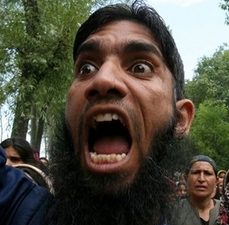 What Does Abdulhakim Muhammed, the Little Rock Shooter, Have in Common With Hasibullah Sidiqi, the Ottawa Shooter, and the Riverdale Four?By Phyllis Chesler Her brother was outraged. How could his sister — his own sister! — conduct herself like a whore? How dare she choose her own husband and worse yet, how dare she carry on a relationship with him prior to the marriage that should never have taken place? Both he and his family felt as if she had deliberately attacked them. Killing them was only an act of self-defense. No, I am not talking about the Afghan-Canadian brother, Hasibullah Sadiqi, who has just been found guilty in Ottawa, Canada for having killed his sister and her fiancee and who has just been sentenced to 25 years to life. Rather, I am talking about the Pakistani-Dane Akhtar Abbas, who in 2006 shot his sister Ghazala Khan to death and also shot her husband, Emal Khan, who survived the deadly shooting. Read more ... Source: Pajamas Media
 |
|
|
Copyright Muslims Against Sharia 2008. All rights reserved.
E-mail: info AT ReformIslam.org
|
|
|


 The Pakistani Taliban has released an audiotape which it says is proof that Hakimullah Mehsud, ( pictured), its leader, was not killed in a US missile attack earlier this week.


 Posts
Posts


